How box office hits like THE MUMMY and GET OUT helped get us here.
In the late '90s, when approached about helming a reboot of one of the iconic Universal Monsters franchises by Universal Studios, writer-director Stephen Sommers infamously said, “Nobody wants to see a guy wrapped in bandages; they're going to laugh at it.”
After several years of back-and-forth with various creatives such as Joe Dante and George A. Romero, Sommers' dictum wound up serving as the creative spark that would launch 1999's The Mummy into full-blown production, on its way to becoming a blockbuster-sized hit. Rather than crafting a small-scale horror film around the high-stakes concept of Karl Freund's original 1932 film, Sommers and his team delivered an Indiana Jones-sized action, romance, adventure film built around the root of a horror film.
The result has more in common with Michael Curtiz than it did with Freund, but was a resounding success on every front. In many ways, the reception of the film served to further prove Sommers' initial point: maybe audiences didn't simply want to see “a guy wrapped in bandages,” maybe they needed something more.
Horror films have existed since the beginning of cinema. Even the earliest wave of filmmakers realized that one of the most effective setups in all of moviemaking is that of a protagonist on the run from a dangerous antagonist, and horror as a genre leans
into this idea. In the years that followed, horror would come to be characterized by sparse budgets, high-concepts, and
big
financial returns. As movies transitioned to sound, some of the earliest and biggest hits that capitalized upon this technological advancement were formative horror films such as Tod Browning's
Dracula
, James Whale's
Frankenstein
, and Rouben Mamoulian's
Dr. Jekyll and Mr. Hyde
.
These films were gargantuan hits with both critics and audiences, becoming highly profitable works on every front. Part of this profitability was due to their comparatively low cost. For example, Frankenstein‘s budget was reportedly $262,007, compared to one of the highest-grossing films of 1931, Charlie Chaplin's City Lights, with a budget of over $1.5 million. This ultimately set a precedent that would remain intact for several decades; horror became a genre where big ideas and small budgets could lead to huge returns.
There were obviously outliers along the way. In the '50s and '60s, some of Alfred Hitchcock's biggest films, North by Northwest and The Birds, had budgets that rivaled the blockbusters of their day. Similarly, the '70s saw filmmakers like Steven Spielberg and Ridley Scott delivering more costly genre-bending fare such as Jaws and Alien, respectively.
Moving into the '80s, as practical effects reached new heights and unveiled a whole new world of creative and technological capabilities, bigger budget horror films became even more common. But for every John Carpenter's The Thing, which had an initial budget of $10 million, at least a dozen lower-budget horror films were proliferating within the cinematic ecosystem. Big budget theatrical horror was still an exception, not the rule.
However, all of this changed in the late '90s and moving into the early '00s. In the wake of The Mummy's success, studios were putting bigger budgets than ever before behind horror films. These larger budgets meant bigger creative swings from the filmmakers behind them, but they also meant that for these films to truly be successful, they now needed to be raking in blockbuster-sized ticket sales. Paul Verhoeven's Hollow Man, a big budget take on The Invisible Man, was released in 2000 and cost $95 million to produce.
The following year, two of the highest-grossing horror films were Ridley Scott's Hannibal and Steve Beck's Thirteen Ghosts, which sported budgets of $87 million and $42 million, respectively. But perhaps the pinnacle example of this maximalist approach to horror in the early '00s came in the form of Sommers' own follow-up to his Mummy films, 2004's Van Helsing. The film saw Sommers and co. leaping from one Universal Monster to a whole plethora of them, and the budget followed suit, as the film cost over $160 million to make.
Hugh Jackman in 2004's VAN HELSING
While some of these big-budget horror films were successes, the vast majority of them were not. Having such gargantuan-sized budgets gave filmmakers the freedom to explore new creative possibilities within the genre, but it also brought about a much harsher financial reality. In the aftermath of several of these high-profile failures, the horror genre retreated to minuscule budgets.
It's telling that only ten years after The Mummy's success convinced Hollywood that big-budget horror films were the future of the genre, Oren Peli's Paranormal Activity would convince them of the exact opposite. On a budget of only $15,000, Paranormal Activity would go on to become one of the most profitable films of all time when released in 2009, grossing nearly $200 million at the worldwide box office.
Suddenly, the sleek, shiny, and pricy horror remakes that had dominated the '00s were gone, replaced by a series of low-budget horror films aiming to recapture these immense profit margins. Initially, this came in the form of more literal riffs on the Paranormal Activity formula, with dozens of other found-footage horror films seeking to ape it and The Blair Witch Project‘s style in the next few years. However, even after that fad died down, the small budget approach remained intact. Throughout the 2010s, the most reliable powerhouses of horror were Blumhouse and A24, both of which specialized in delivering low-budget, high-concept horror films that turned huge profits.
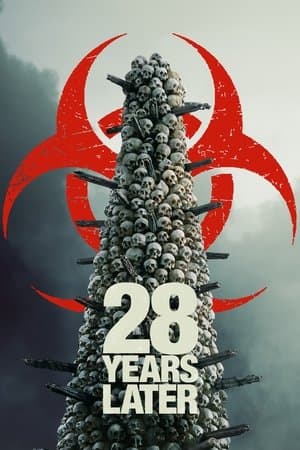
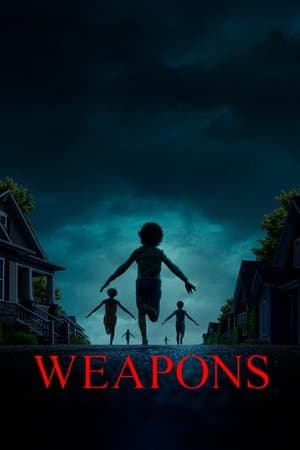
But in 2025, things appear to be changing in substantial ways within the horror genre. The most successful and notable horror films of the year thus far have all been released from major studios and feature notable filmmakers tackling the genre with big budgets behind them. From Ryan Coogler's Sinners to Danny Boyle's 28 Years Later to the newly released Zach Cregger's Weapons, these films reflect a completely different approach to the horror genre that has grown increasingly popular over the last several years.
As the low-budget films released by the likes of Blumhouse and A24 enabled new voices to enter the field and tell compelling stories in dynamic ways that resonated with audiences, a revitalized energy was brought to the horror genre, both critically and commercially. One of the easiest examples of this to point to is, of course, Jordan Peele.
Peele had been operating within the entertainment industry for decades, but it wasn't until 2017 that he wrote and directed his first feature film, Get Out. The Blumhouse film became not only a massive success, but a zeitgeist-capturing phenomenon. In the wake of the film's success, Peele's subsequent films grew in size and ambition.
While Get Out had a budget of only $4.5 million, his sophomore effort, Us, received a budget of over $20 million. While Blumhouse still produced Us, the film's budget was a notable demarcation from its usual approach. For his third film, Peele went even bigger, with a $68 million budget for Nope. This time around, Peele was dreaming so big that he had to leave Blumhouse entirely behind, with the film being solely produced by his own Monkeypaw Productions and Universal.
Peele is far from alone in this regard, as many of his horror peers (Robert Eggers, Julia Ducournau, and even Ari Aster) have similarly seen their aspirations grow in tandem with the price tags of their films.
The evolution of these filmmakers has seemed to operate in synchrony with the appetites of audiences themselves.Each of Peele's films was asubstantial box office success, and the filmmaker's ability to retain so much of his own voice and originality across multiple budget ranges seemed to inspire his filmmaking peers. Over the last year, even Blumhouse and A24 seemed to realize audiences craved more expansive (and more expensive) horror experiences, as each of them has already released several films in 2025 touting larger budgets than their typical fare.
Blumhouse released Leigh Whannell's Wolf Man and Gerard Johnstone's M3GAN 2.0, both of which had budgets closer to $30 million, and neither of which netted a profit. For their part, A24 released the celebrity-filled horror films Death of a Unicorn and Opus, neither of which performed particularly well at the box office.
Contrast this with a film like Sinners, whose budget was over $90 million, but whose gross proved to be immense. The film became one of the highest-grossing films of the year so far, raking in $366 million at the worldwide box office, and captured the pop-culture imagination in a big way. Similarly, 28 Years Later had a budget of $60 million and has already grossed over $150 million at the worldwide box office. Now, Zach Cregger's Weapons has topped the domestic charts with an estimated $42.5 million. That was above pre-release expectations, which largely had it in the $30 million range. The film also pulled in $27.5 million overseas, giving it a $70 million global start.
The reason that 2025 has proven so kind to these films is not because their budgets are bigger. The lesson that horror learned in the early '00s is the same one that blockbuster films had to learn in the late 2010s and early 2020s; just because you throw more money at a project doesn't make it better or mean it will make more money.
Instead, films like Sinners and 28 Years Later follow in the footsteps of a project like Nope; they see a genuine visionary filmmaker working within the genre, and the project's budget rises to meet their ambitions. There will always be a place for low-budget horror films, as recent successes such as the Terrifier franchise make clear, but audiences are clearly hungry for ambitious projects within the genre, shepherded by boundary-pushing creatives.