New York! Get Your Witch On At This Film Archive Screening Series

It was such a pleasure working with Anthology Film Archives to bring some of the lesser-seen witch films in my book, That Very Witch: Fear, Feminism, and the American Witch Film, to the big screen! The book explores the relationship between feminist movements in America and the witch horror films that responded to them, drawing a throughline across more than fifty years of cinema to unpack the powerful sway this cinematic boogeywoman holds over our cultural imagination.
With this selection, I hope to draw attention to stranger, more idiosyncratic, or rougher-around-the-edges examples of the subgenre over time, some familiar, some less so. These four films bring you a cavalcade of acid trips, burlesque shows, giant ghost birds, and laser beams, casting feminist spells that have either earned them a rightful place in the cult canon, or deserve to!
You can get your tickets here; the screening series is running from August 27th to August 31st.
The films:

Night of the Eagle (aka Burn, Witch, Burn, 1962, Sidney Hayers)
Though Night of the Eagle is technically a British film, this atmospheric chiller is an AIP picture conceived by two American horror stalwarts, Charles Beaumont and Richard Matheson, both novelists and veterans of The Twilight Zone. This film, a sordid psychological thriller about men, women, and the lies they tell each other, is a great entry point into the anxieties at the heart of the witch films that would eventually come to dominate the 1960s horror cycle: When a psychology professor with a focus on superstition learns his wife practices witchcraft, his worldview is tested and his life is brought to the brink. Bridging the gap between classic ‘40s horror films like Cat People and titans like Rosemary’s Baby with crafty plotting and stark cinematography, Night of the Eagle is a haunting look at some of the simmering fears around gender, religion and the social contract that eventually defined the politics of the decade.
This movie creeps up on you. In the beginning it feels almost like a parlor room drama: Hayers’ direction and Reginald Wyer’s frosty, formal shooting style gets you comfortable, presenting the staid protagonist and his ordered life in almost mundane terms. Soon, though, this drama begins to take on an uncanny quality that ratchets up–– that formality begins to warp and stretch, made
into a tangible surface people hide behind. In that sense the style really feels like a precursor to Rosemary’s Baby. Creepy! I love the scenes on the beach at night too, they remind me of classic ‘40s horror like I Walked with a Zombie or Isle of the Dead. Of all the films on this list, I think Night of the Eagle feels the most like a peek into someone else’s bad dreams.
Something Weird (1967, Herschel Gordon Lewis)
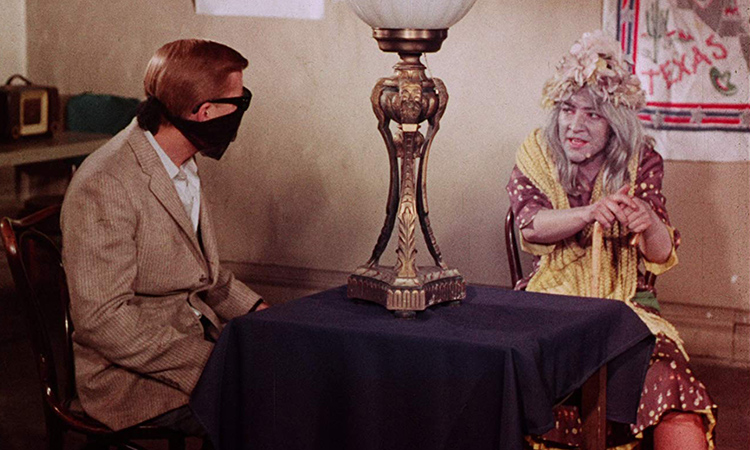
True to its name, Lewis’ lesser-known horror quickie, Something Weird, must be seen to be believed. This wild, incoherent, quasi-collage of acid, ESP, karate, witches, and serial killers (among other things) takes being a product of its time to a new level; its screenwriter was a professor with an impassioned interest in the potential military uses of telepathy and extrasensory perception who hoped the film would be a way to share his warning to the world. While Lewis’ decision to put his friend’s passions to screen may not have been particularly consciousness-raising (or particularly lucrative, either), this oddball flick serves beautifully today
as a vivid portrait of the gonzo intersections between the movies, the New Age, and the stranger political concerns of the period. Something Weird is hilarious, fascinating, and absolutely unique.
In a lot of ways, Something Weird is a movie not even a mother could love. It’s virtually incoherent, narratively cracked, listing and jerky in its pacing. Thematically, it’s like the zeitgeist of the mid-60s as explained by a comic book threw up (which was great for my purposes as an author). Like any B-movie worth its salt, even for all of its wackiness, there are also passages that are, frankly, boring. In other words, it’s a perfect midnight movie. Where else are you going to find a detective battle sentient bedsheets? In all my years of screening films for this book, I think Something Weird made me laugh the most.

The Mephisto Waltz (1971, Paul Wendkos)
While it was largely dismissed at the time as a cheapie softcore rehash of Rosemary’s Baby for the jet-set directed by a man better known for TV than film, there’s more to The Mephisto Waltz than initially meets the eye. This kinky tête-à-tête pairs Jacqueline Bisset and Alan Alda as an artistic young couple tempted by wealth, influence, sex, and black magic. Replete with body swapping, crash zooms, and swinger parties, the film takes the broader strokes of Ira Levin’s classic tale and bends them in a less Catholic, more overtly erotic direction to twisted, surprisingly feminist results.
If Something Weird is utterly singular, The Mephisto Waltz is comfortingly familiar; this movie feels like a pulp paperback. It’s so of its time stylistically (I love a crash zoom), and the performances and direction carry you easily through a plot that does indeed bear a strong resemblance to Rosemary’s Baby. That said, this movie has a lot of weirdness up its sleeve, and the last act gives Jacqueline Bisset a lot of room to run (read: freak out). This movie is psychedelic, melodramatic, and horny. It’s also undeniably entertaining and, I think, strangely empowering. I’ll always be a cheerleader for The Mephisto Waltz.

The Devonsville Terror (1983, Ulli Lommel)
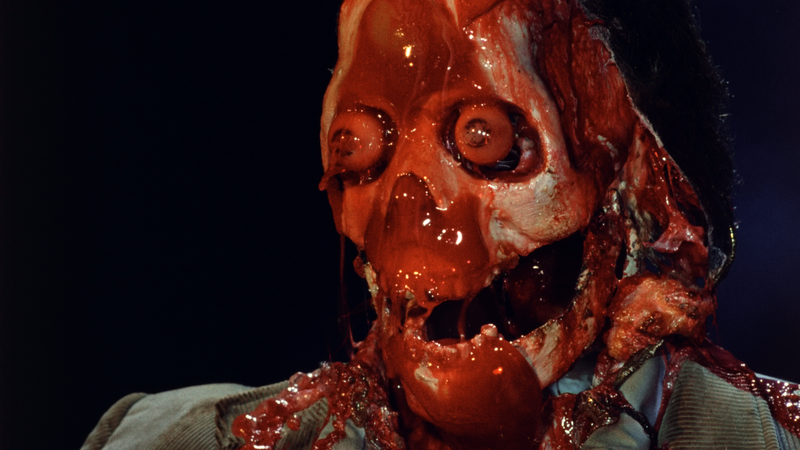
The Devonsville Terror is another brashly feminist film whose idiosyncrasies elevate familiar material, offering a jolt of freshness in a soon-to-be-oversaturated straight-to-video landscape of witch horror in the ‘80s. Blending the feminist conventions of the previous decade’s witch horror cycle with the slasher conventions of the day–– all filtered through the dreamy arthouse stylings of its director, New German Cinema and Video Nasty pioneer Ulli Lommel, whose collaborators included Werner Rainer Fassbinder and Andy Warhol. When three self-assured young women arrive in a small Wisconsin town, the local men, consumed by greed, fear, and repressed lust, begin a witch hunt against them. Its naturalistic treatment of masculine entitlement to feminine bodies is uncomfortably familiar, viscerally direct. Like Something Weird, the film also incorporates the psychedelic and New Age elements of its moment, serving as a time capsule for a country on the cusp of radical transformation as the counterculture drew its very last gasps. It’s an underseen gem that deserves more attention.
Sifting through the straight-to-VHS witch films of the ‘80s was probably the most challenging stretch of viewing I did while writing this book. So I was pleasantly surprised when, between virtually incomprehensible pan-and-scan rips on YouTube and fuzzy tapes I bought on eBay, I found The Devonsville Terror. This movie is beautiful to look at, has a strong directorial hand, and is clearly working through a lot of ideas, all without skimping on the gore. This tale of misogyny run amok is (mostly) sharply evocative. A couple scenes of women’s isolation in a hostile small town have really stuck with me. Like every film on this list, though, it’s also got its oddball side, namely a plot involving “past-life regression,” supernatural worms, and Donald Pleasance. It’s a pretty great combination!