It’s no secret that Universal has been having a tough time bringing their classic Universal Monsters back to the big screen for a new generation in recent years, with films including Renfield, The Last Voyage of the Demeter and Abigail failing to turn a profit at the box office. The sole success story of the […]
It’s no secret that Universal has been having a tough time bringing their classic Universal Monsters back to the big screen for a new generation in recent years, with films including Renfield, The Last Voyage of the Demeter and Abigail failing to turn a profit at the box office. The sole success story of the bunch was Leigh Whannell’s The Invisible Man, a bold take on the classic monster tale that scared up $144 million on a Blumhouse budget of just $7 million.
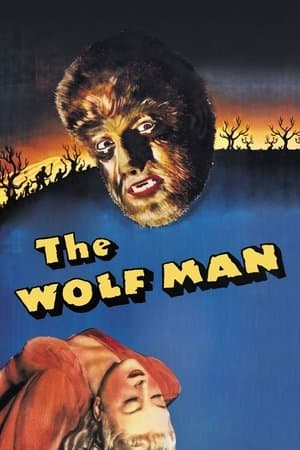
Whannell is back at the box office with Wolf Man for Blumhouse and Universal, another fresh take on a legendary monster from the Universal catalogue. The new movie’s production budget is a reported $25 million, quite a bit higher than the cost of The Invisible Man back in 2020. That means it’ll have to make more to become profitable, and it’s not off to a great start so far.
Wolf Man scared up $12.5 million across 3,354 theaters at the domestic box office over the 3-day Martin Luther King Jr. Day weekend, $10.9 million of which was made across the traditional 2-day weekend. Worldwide, Wolf Man has thus far howled its way to $17.3 million.
Here in the United States, Wolf Man failed to hit the number one spot on the box office charts for the weekend, topped by both Mufasa: The Lion King and new release One of Them Days.
For the sake of comparison, Whannell’s The Invisible Man opened to $28 million in the United States back in 2020, nearly three times higher than Wolf Man‘s debut performance. Both films, along with the aforementioned Renfield, Demeter and Abigail, are part of Universal’s new initiative to forgo a shared Monsters Universe and instead focus on one-off movies that stand on their own two feet, but it looks like maybe even those plans need to be taken back to the drawing board. One could argue that modern audiences just don’t care enough about the classic monsters to get them back on the top of the box office charts here in the modern era.
Then again, Robert Eggers’ Nosferatu just hit $156 million at the box office, becoming one of the highest grossing horror movies of all time. So perhaps the bigger issue here is the quality of Universal’s recent output, with likely tanking in particular. One thing’s for certain: modern audiences aren’t going to turn up to watch these movies based on IP alone, and that’s been a clear message audiences have been sending to Hollywood in recent years. We’ll be tracking to see how Universal pivots their plans in the years to come.