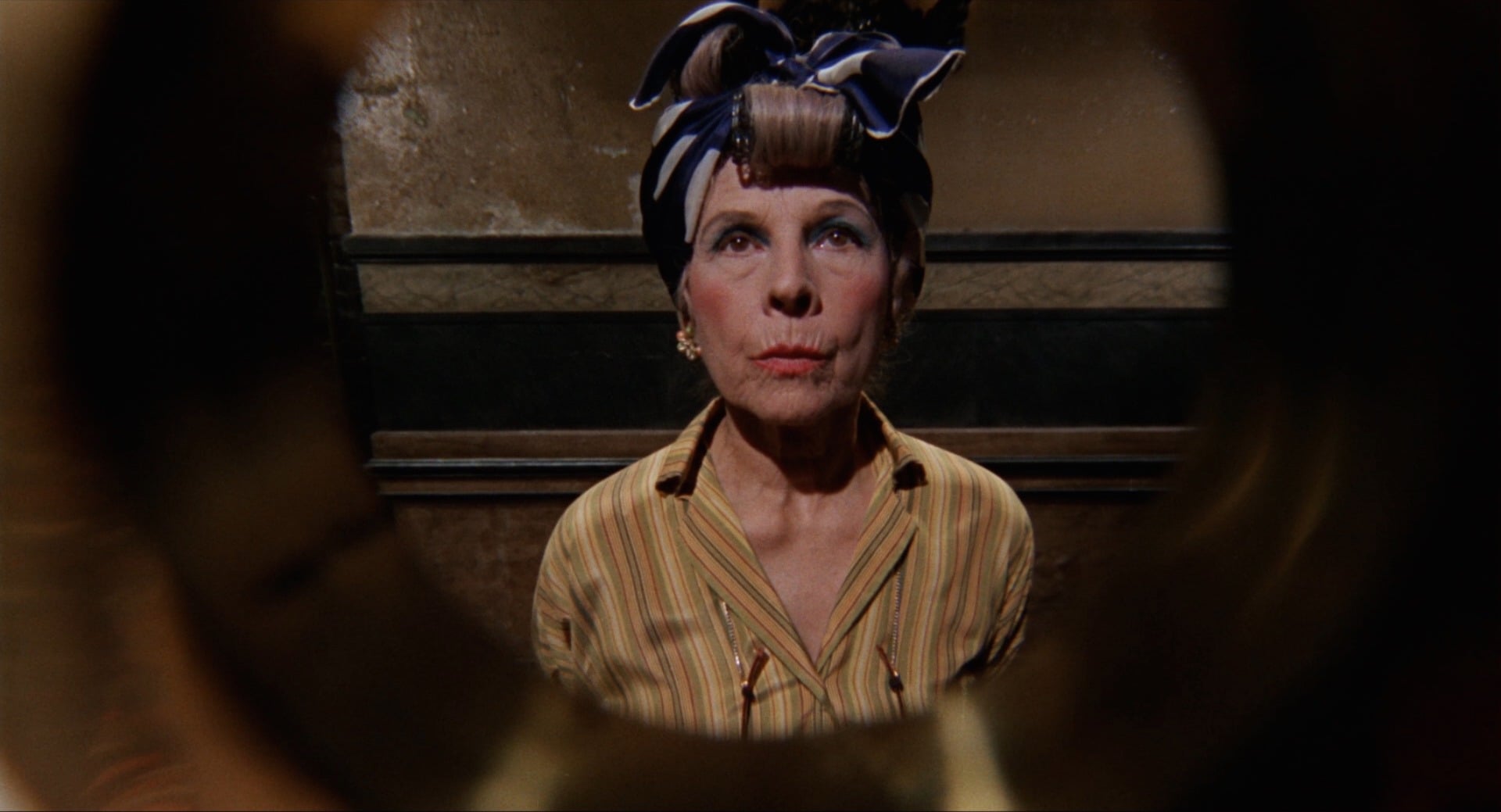
With over a century’s worth of cinematic witches, Ruth Gordon’s turn in Rosemary’s Baby as Minnie Castevet broke the mold. To be fair, the reveal that the disarming, matronly Manhattanite serves Satan comes as a late-game twist, but even then, Minnie doesn’t revert to an archetypical witch form. Minnie Castevet remains as effervescent, stylish, and […]
With over a century’s worth of cinematic witches, Ruth Gordon’s turn in Rosemary’s Baby as Minnie Castevet broke the mold. To be fair, the reveal that the disarming, matronly Manhattanite serves Satan comes as a late-game twist, but even then, Minnie doesn’t revert to an archetypical witch form. Minnie Castevet remains as effervescent, stylish, and unflappable as she is from the start, even as Rosemary’s Baby ends on its iconic shocking final shot.
That is by design, of course. The very notion that the Devil’s most loyal followers aren’t physical monsters or social outcasts but everyday people who sold their souls for money and status is the audacious foundation for Rosemary Woodhouse’s (Mia Farrow) harrowing plight, after all. While writer/director Roman Polanski, adapting Ira Levin’s bestselling novel, effectively lays the groundwork to ensure this reveal achieves its seismic intended impact, much of the credit belongs to Ruth Gordon as Rosemary’s overbearing but warm new neighbor.
It’s easy to overlook Minnie’s significant role in heralding the Antichrist through her continued manipulations of Rosemary when Gordon is such an unstoppable force of nature. Whereas horror often relegates Satan’s servants to darkness, both in design and spirit, Minnie Castevet is a bright flash of lightness. The petite, elderly woman is pure energy and rapid fire wit, with an icy contempt lingering