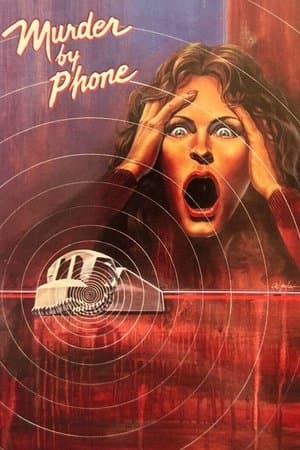
In the years leading up to 1982’s Murder by Phone, telephones had mostly been used as a portent in horror — that first tangible sign of danger. In many pitches, both old and new, the recipients of creepy calls would have anywhere from moments to days before meeting their grisly fate. The killer could be […]
In the years leading up to 1982’s Murder by Phone, telephones had mostly been used as a portent in horror — that first tangible sign of danger. In many pitches, both old and new, the recipients of creepy calls would have anywhere from moments to days before meeting their grisly fate. The killer could be lurking right around the corner, or a death curse required extra time to ripen. The villain in Michael Anderson’s film, on the other hand, was less patient and more direct. Once a potential target was made, their demise was immediate, not imminent.
Prior to finding its way to the big screen, Murder by Phone started out as a novel, or to be more specific, a novelization. On average, a novelization is released ahead of its film counterpart, yet that gap also tends to be small and somewhat punctual. In the case of Murder by Phone, though, its story first appeared in print three years before Anderson’s adaptation saw the light of day.
Under the simpler title of Phone Call, the literary interpretation of Michael Butler and Dennis Shryack’s screenplay was originally published by Signet in 1979; that following year, Anderson’s film was shot in Toronto, Canada. Whether or not the credited author, Jon Messmann, is a collective nom de plume for the two screenwriters or really the same Messmann who, as Jon Sharpe, created the western series The Trailsman — also published through Signet — is unclear. Even still, the two versions aren’t so dissimilar that fans need to track down a copy of the book posthaste, but if the film rings a bit too hollow for one’s liking, then that written approach to high-voltage terror makes for a fuller experience.