By the mid-1960s, things were getting weird. At the movies, the French New Wave was reaching America’s shores and inspiring the first move toward experimental filmmaking in Hollywood. On the fringes of this, rogue independent filmmakers were finding ways to be experimental and artistic while also managing to make plenty of money through exploitation films, […]
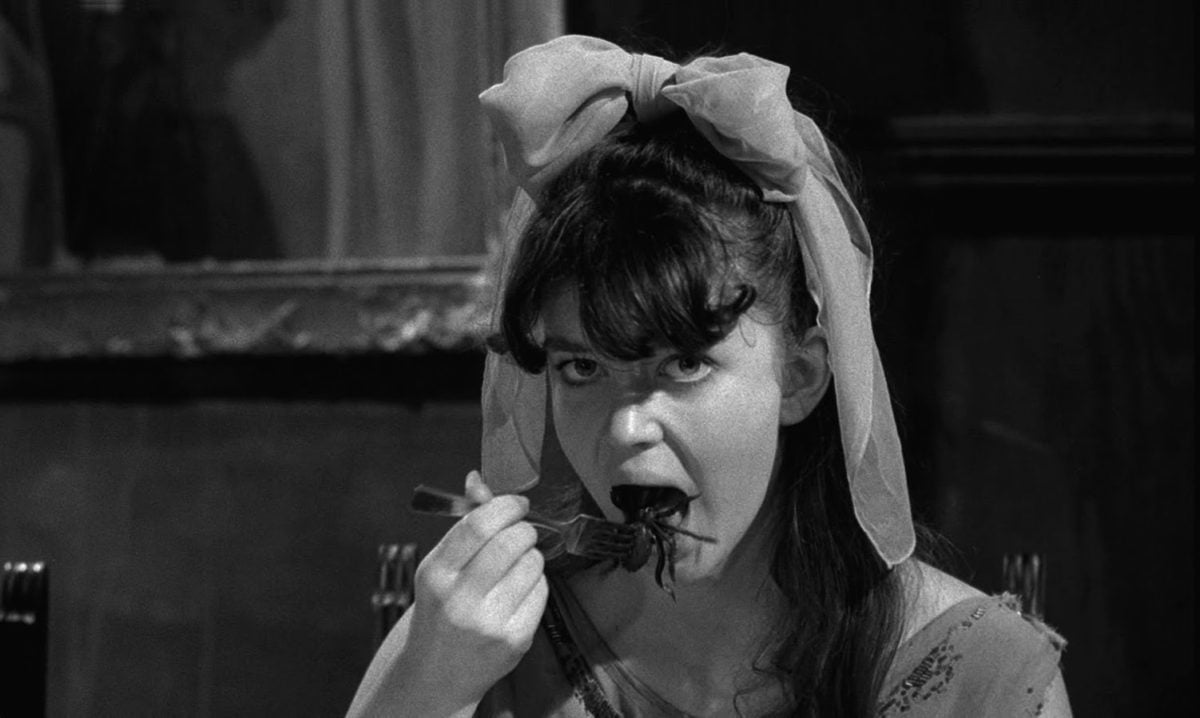
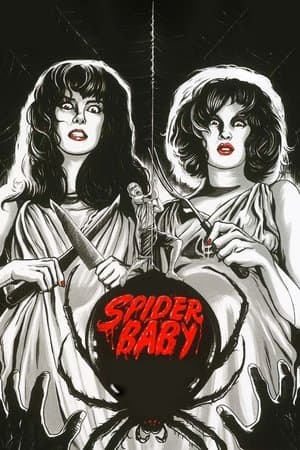
By the mid-1960s, things were getting weird. At the movies, the French New Wave was reaching America’s shores and inspiring the first move toward experimental filmmaking in Hollywood. On the fringes of this, rogue independent filmmakers were finding ways to be experimental and artistic while also managing to make plenty of money through exploitation films, a charge led by William Castle and Roger Corman. Jack Hill came up through the earliest days of what would eventually be called the “Corman School” and made his debut feature for next to nothing under the title Cannibal Orgy or The Maddest Story Ever Told.
When the film eventually saw the light of day, it retained its subtitle but garnered the new, and perhaps more esoteric, moniker Spider Baby.
The film was made during an unusual time in the history of horror. The classic monster movies had long-since fallen out of vogue in favor of Hammer’s more sexual and gory outings, the exploitation films of American International Pictures and William Castle, and the new more reality bound films inspired by Alfred Hitchcock’s Psycho (1960). In these years, classic horror stars like Vincent Price, Boris Karloff, Peter Lorre, Basil Rathbone, John Carradine and others comingled with the new crop of rising stars both in front of and behind the camera that would redefine the genre in the late 60s and early 70s. One of the great joys of watching Spider Baby today is seeing the legendary Lon Chaney, Jr. in his twilight years acting alongside a very young legend-in-the-making Sid Haig. As Peter Bogdonavich would do for Karloff in Targets a few years later, writer director Jack Hill gives Chaney one of the best roles of his career, which plays upon his persona as one of the great horror actors while also allowing him to play against type.
But then in a way, the film is against type in every sense. It is a new brand of horror comedy, one that builds upon the foundations of Corman’s groundbreaking films A Bucket of Blood (1959) and Little Shop of Horrors (1960), allowing for genuine creepiness and outright horror with an underlying tone of dark humor rather than outright gags. Spider Baby is a comedy about the darkest of subjects: cannibalism, hereditary mental illness, exploitation of the vulnerable, but it succeeds because it is built upon such a strong foundation of story structure, compelling characters, and genuinely remarkable performances. That it is also so well written, photographed, edited, and directed makes it something of a miracle. That we are actually able to see it today is even more of one.