I’m of the opinion that stories are more satisfying within the historical context that they were originally created. For instance, Spider-Man works better as a character when inserted into the colorful counter-cultural movements of the 1960s, and Count Dracula loses a lot of the subtext that makes him so interesting when removed from the final […]
I’m of the opinion that stories are more satisfying within the historical context that they were originally created. For instance, Spider-Man works better as a character when inserted into the colorful counter-cultural movements of the 1960s, and Count Dracula loses a lot of the subtext that makes him so interesting when removed from the final days of the Victorian era.
I believe this is also the case with the writings of H.P. Lovecraft. While cosmic horror as a concept can be effectively applied to nearly any time or place, the irrational fear of foreign cultures and incomprehensible alien beings was much more poignant before ideas like extraterrestrial invaders and alternate dimensions escaped the confines of pulpy magazines and entered mainstream culture. That’s why it’s so difficult to adapt Lovecraft’s stories to a modern setting, as both society and media have evolved to the point where it’s hard to imagine someone going mad just because they learned that they’re related to fish people – and that’s not even mentioning the inherent issues with translating the author’s vague monsters to a visual medium.
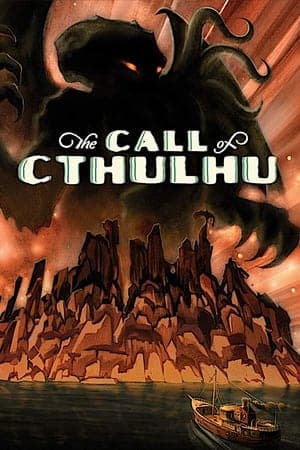
Does this mean that it’s impossible to properly adapt Lovecraft to the big screen? Of course not! There are several great cinematic incarnations of the Cthulhu Mythos, and this year happens to mark the 20th anniversary of one of the very best. Naturally, I’m referring to what is undoubtedly the most faithful adaptation of the Providencean writer’s work, the H.P. Lovecraft Historical Society’s faux-silent film The Call of Cthulhu.
Originally founded in 1986 by a group of friends united by a combined love of theater and the writings of H.P. Lovecraft (with their interest in the Mythos having been sparked by Chaosium’s Call of Cthulhu role-playing game), the HPLHS was no stranger to adapting the author’s work into other mediums. In fact, their first adaptation was a shot-on-VHS rendition of The Statement of Randolph Carter produced all the way back in 1988.
Of course, as the Society grew, so did their artistic ambitions. After a series of comedic musical productions, the group eventually decided that it was time to invest in a more serious adaptation of a Lovecraft yarn. So began a grueling eighteen-month-long journey as Andrew Leman and his fellow Society members decided to bring 1933’s The Call of Cthulhu to life as it might have been adapted to the big screen soon after publication of the original story.