H.P. Lovecraft adaptations certainly aren’t rare, but despite a number of relatively faithful and sometimes even terrifying retellings, these movies seldom manage to replicate Lovecraft’s unique style. After all, the Rhode Island author infused his work with a peculiar blend of horrific excess and existentialist philosophy, so it makes sense that even masters of the […]
H.P. Lovecraft adaptations certainly aren’t rare, but despite a number of relatively faithful and sometimes even terrifying retellings, these movies seldom manage to replicate Lovecraft’s unique style. After all, the Rhode Island author infused his work with a peculiar blend of horrific excess and existentialist philosophy, so it makes sense that even masters of the craft like the late Stuart Gordon chose to focus on a single one of these elements when making adaptations rather than risking both.
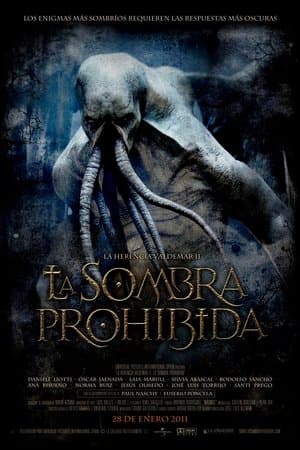
However, there exists a criminally underseen duology of films that managed to overcome the inherent difficulty of adapting Lovecraft by bypassing his original work entirely and instead replicating the pulpy thrills of a certain tabletop RPG. Naturally, I’m referring to Spain’s The Valdemar Legacy and its sequel, The Valdemar Legacy II: The Forbidden Shadow (which is really just the second half of the same movie). With the Halloween season finally upon us, I believe this is the perfect time to look back on these films as unofficial adaptations of the Call of Cthulhu role-playing game!
Despite being considered a high-profile release in Europe, The Valdemar Legacy was actually an independent passion project brought to life by the blood, sweat, and tears of writer-director José Luis Alemán. A lifelong connoisseur of Weird Fiction, Alemán wished to combine his favorite scary stories into an epic pastiche made by genre fans for genre fans.
Unfortunately, the scope (and subject matter) of such a project made it nearly impossible to guarantee funding through the government subsidies that keep Spanish cinema alive – especially after the box-office failure of Stuart Gordon’s underrated Lovecraft adaptation
Left with no other choice, Alemán decided to risk everything and finance the picture himself, selling off assets and picking up a few loans in order to bring his ambitious screenplay to life as a two-part epic. This resulted in Spain’s first major genre film produced without government resources!
Of course, financing was only half the battle, as both parts of the story ultimately required over 19 weeks of principal photography to complete, as well as an extensive post-production process in order to sort out the visual effects. The biggest difficulty resulted from the director’s wish to portray the script’s two timelines in completely different styles, with the modern-day investigation playing out like a Stephen King novel and the flashbacks being presented like a long-lost Hammer Horror picture.
In the finished film, we follow real estate specialist Luisa Llorente (Silvia Abascal) as she unwittingly becomes part of a paranormal conspiracy involving disappearances at a decaying Victorian mansion previously owned by disgraced occultist Lázaro Valdemar (Daniele Liotti). As the film’s dual timelines unfold, we slowly uncover the tragic series of events that cursed Valdemar’s estate in the past as well as the terrifying part that Luisa is meant to play in the mansion’s dark future.
With early previews of the film being mostly positive, Alemán was shocked when the first chapter of his horrific saga released to scathing reviews and disappointing box office numbers. Not only were audiences claiming to have been cheated by the lack of Lovecraftian elements in what was advertised as a Lovecraft adaptation (with the first film’s narrative feeling a lot more like one of Roger Corman’s Edgar Allan Poe adaptations than anything resembling Cosmic Horror), but the odd structure and abrupt cliffhanger ending resulted in extremely negative word-of-mouth.
And while The Valdemar Legacy and its follow-up had been conceived (and mostly filmed) as one big story from the outset, additional shooting was required in order to fully complete the sequel – meaning that fans had to wait two years for a proper ending! Thankfully, revisiting these films today means that we can immediately head into The Forbidden Shadow, with the second film picking up right where the previous one left off and finally expanding on the Lovecraftian elements that were only hinted at before.
Watching the complete story unfold in one go made me realize that the duology has a lot more in common with the popular event series of the 90s (think Rose Red or Intensity) than actual movie franchises. Even the expansive cast and their interpersonal melodrama are far more reminiscent of what you’d expect from a serialized TV show than a feature film, and that’s why The Valdemar Legacy sometimes feels like an impeccably shot miniseries rather than two movies – or at least a long-lost Call of Cthulhu campaign where the Game Master (or Keeper) prepared an elaborate Victorian backstory but had little control over the modern-day players.
And while this chaotic mix of literary, television, and even role-playing game influences sounds like it shouldn’t work, trust me when I say that the end result is one of the most entertaining pieces of Lovecraftian fiction I’ve seen in years. At its best, the Valdemar story feels like a long-lost Stuart Gordon film, but even at its worst, it still feels like a charming made-for-TV production filled with paranormal intrigue and memorable characters (with the exception of the bland real-estate ensemble).
From the disturbed groundskeeper who keeps a family of creepy mannequins to Lázaro Valdemar himself (who is arguably the real protagonist despite mostly appearing through extended flashback sequences), there are plenty of original characters here that would feel right at home in a real Lovecraft yarn. The films also feature a number of amusing appearances from historical figures ranging from Aleister Crowley to Lizzie Borden and even H.P. Lovecraft himself – all connected by a conspiratorial web of occult intrigue involving portals to other dimensions and the infamous Necronomicon.
This is exactly the kind of historical horror that originally got me into the Call of Cthulhu role-playing game in the first place, so I appreciate how the film is set up almost exactly like a classic campaign – i.e., a group of regular people slowly uncover an eldritch threat at a cursed location only to barely escape with their sanity. Sure, this means that the modern-day “investigators” are basically cardboard cut-outs rather than actual people, but that’s par for the course with this kind of yarn.
Though these films aren’t particularly scary, the excellent cinematography, impressive sets, and extensive mythology make the Valdemar saga worth experiencing despite obvious budgetary issues. Even when things get silly (like in the case of the CGI-enhanced Ghoul or even the Cthulhu-inspired “final boss”), Alemán’s efforts feel more sincere than cheap. In fact, some of the rough edges enhance the overall pulpy atmosphere.
The only real issue here is pacing. The Valdemar Legacy should either have been a single three-hour film cutting out all of the extraneous subplots or an extended mini-series interweaving both timelines together through alternating scenes instead of lengthy chunks of story.
At the end of the day, The Valdemar Legacy duology isn’t the best Lovecraftian adaptation out there, with both films suffering from inconsistent logic and janky effects work, but there’s so much genuine love for the source material here that it’s easy to overlook these surface-level flaws and enjoy the retro thrills. That’s why I’d recommend giving this hidden gem a chance if you’re a fan of RPG-inspired scares or long-form frights!