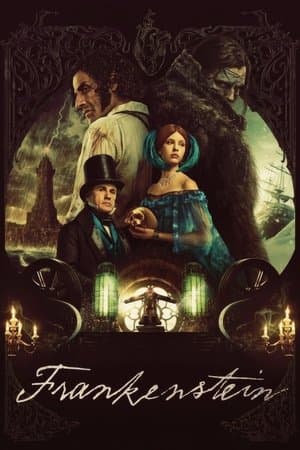
How Edinburgh’s Dark Medical History Creates A Perfect Setting For Del Toro’s FRANKENSTEIN
By Fangoria.com
10 min readThe CRIMSON PEAK director's latest Gothic masterpiece adds a Scottish setting. Let's unpack it.

The CRIMSON PEAK director's latest Gothic masterpiece adds a Scottish setting. Let's unpack it.
Gone, too, was Bella's reclamation of the narrative, the letter that pulls the rug out from under the reader just as they're getting comfy, refuting the story her husband has told about her and recontextualizing him as a fantastical weirdo—an account then refuted by a fictionalized version of Gray, continuing the novel's playful dance with the “truth” and its pointed habit of filtering Bella's narrative through the lens of men.
To say I was disappointed would be an understatement. It didn't bother a lot of people, and that's fine, but the erasure of both Bella's story and Scotland struck a nerve for me (and a lot of other Scots, too). So when I saw that another of my favorite Frankenstein texts—Mary Shelley's OG, no less—was getting a big-budget adaptation, I was a little nervous. I didn't think Guillermo del Toro would play me like that, but you can never be sure. As I settled into one of the plush velvet seats at the Netflix-owned Paris Theater in NYC last month, I braced myself for the worst.
I needn't have worried. Del Toro's Frankenstein is not only a great adaptation of its source material, faithful in all the ways it counts and deeply, achingly human, but also somehow manages to fix everything I hated about Poor Things in the process. Jacob Elordi's creature? Here he is reclaiming the narrative, quite literally bursting into the movie halfway through to call Victor (Oscar Isaac) an asshole (I'm paraphrasing) and dispute his skewed, one-sided version of events.

Elizabeth (Mia Goth), a character who exists in the novel primarily to marry her cousin and die, is also given more agency, thoroughly rejecting Victor's creepy advances and showing kindness to the monster-son he abandons. And, miraculously, almost entirely unexpectedly, Scotland is here, too.
I say almost because I knew going into Frankenstein that del Toro shot part of the film in my beloved homeland. In fact, some interiors were even shot in my hometown of Arbroath—specifically at the historic Hospitalfield House—a hop and a skip away from the city of Dundee, my birthplace, where Shelley would “commune with the creatures of [her] fancy” on the banks of the River Tay shortly before writing her masterpiece. But Scotland is a popular filming location; that doesn't necessarily translate to a Scottish setting. Besides, the novel's action primarily takes place in Germany, Switzerland, and the freezing Arctic. It seemed too much to hope that Scotland would get much of a look in.

But del Toro seemingly heard my grumbles about Poor Things and, in a move that feels like it was made just for me, relocated Victor's early dabblings with the dead to Scotland's bonny capital, Edinburgh. The city is mentioned in the book, but only in passing—quite literally, with Victor noting that he “visited Edinburgh with languid eyes and mind” as he headed to Orkney to begrudgingly build the monster a mate, commenting on the beauty and romance of the architecture before expressing his impatience and moving on.
Del Toro's Victor spends significantly longer in the city that I called my home for half a decade, with the filmmaker recognizing that the maniacal monster-maker would have fit perfectly into the twisted Edinburgh medical scene of the day.

That day is somewhere around 1855, a little later than the events of the novel, which was published in 1818 and is implied to take place in the late 1700s. After telling us his woe-is-me backstory, the now-adult Victor is seen presenting his early research into reanimation to a roomful of stuffy old men in Edinburgh's Royal College of Surgeons (RCS), from which he'll soon be expelled.
While not entirely dissimilar experiments were taking place in the sister RCS in London around this time, such as Giovanni Aldini's use of bimetallic electricity to make a corpse convulse before an audience in 1803, Edinburgh's RCS—one of the oldest surgical colleges in the world—was embroiled in the kind of body-slicing scandal that Victor Frankenstein would be all over.
In 1752, the British Parliament passed the Murder Act (metal name, I know), decreeing that the bodies of those hanged for the crime of murder were fair game for public dissection. The act, which would go largely unchallenged for the better part of a century, was focused on “better preventing the horrid crime of murder” by adding posthumous humiliation into the mix, but the impact it had on the anatomical world was profound.
The study of medicine was exploding in Edinburgh during this period, with systematic, scientifically grounded teaching methods being developed and the role of the surgeon finally becoming disentangled from that of the barber. A legal supply of bodies to carve up in front of students was an anatomist's wet dream.
Frankenstein engages with this grisly history in a comedic scene shot in the courtyard behind the Writers' Museum, just off Edinburgh's picturesque Royal Mile. A series of public hangings is underway and Victor, now fully invested in making his monster, is sizing up the bodies of the still very much conscious condemned men before they swing, aided by an enthusiastic executioner (Burn Gorman). Though most hangings at the time actually took place on the Grassmarket, a short walk away, the Royal Mile was the site of the last public execution in Edinburgh, marked today by three innocuous brass plates set in the pavement where the gallows stood.

Of course, finding a corpse to dissect wasn't as simple as the arrogant Victor makes it look. It wasn't long before demand outstripped supply, and a thriving body snatching industry emerged to fill the gap. Visiting Edinburgh's most famous graveyard, the beautiful and deeply haunted Greyfriars Kirkyard, you can still see the aftermath of this shady trade. Metal cages (known as mortsafes) protrude from graves, while gorgeous tombs are marred by sturdy iron bars and gates, all designed to keep opportunistic “resurrectionists” away from granny's corpse. Shelley's Victor was only too familiar with this practice, “forced to spend days and nights in vaults and charnel houses” where he collected bones for his “filthy creation.”
Graverobbing scenes make it into several adaptations of the novel, including James Whale's 1931 classic, while Hammer's The Curse of Frankenstein engages with the other side of the trade: straight-up murder to procure parts. One of the first documented cases of this happening occurred in Edinburgh in 1751, when Helen Torrence and Jean Waldie killed a young lad for two shillings and found themselves dangling from the end of two short ropes on the Grassmarket for their trouble.
But the most famous occurrence came to light in 1828 as two Irish implants to the city—William Burke and William Hare—were discovered to have murdered 16 people and sold their extra-fresh bodies to the anatomist Robert Knox, a respected fellow at the Royal College of Surgeons of Edinburgh, who almost certainly knew what was happening and turned a blind eye. When caught, Hare turned King's evidence to avoid the noose, leaving Burke to be hanged and publicly dissected by Knox's rival, Alexander Monro.
His bones, death mask, and some gnarly artifacts made from his skin remain on display in Edinburgh to this day. Knox, for his part, was cleared but disgraced. Forcibly ejected from the local medical scene, he eventually left Edinburgh altogether, his anatomical philosophy all but forgotten, his name forever associated with murder most foul.
These crimes and others like them finally prompted the passing of new legislation in the UK. The Anatomy Act of 1832 expanded the pool of available bodies to include the unclaimed dead in workhouses and prisons. This is perhaps why del Toro's Victor, operating in the latter half of the 19th century, quickly abandons the gallows as his primary source of raw materials, instead picking through piles of fallen soldiers on the battlefields of the Crimean War.
Victor largely leaves Edinburgh behind when he has all the necessary parts, although an echo of the city remains in his laboratory. Art director and production designer Tamara Deverell notes that the converted water tower is partly based on Edinburgh's striking Scott Monument, as well as the Wallace Monument in Stirling. But the time the scientist spends in the city feels significant.

Shelley's novel was published a full decade before the Burke and Hare murders exposed the dark side of the anatomy trade and hastened reform. By shifting the timeline up, del Toro's Victor feels like a spiritual descendant of Knox, a man so blinded by ambition and the pursuit of science that he dismisses the human cost, and who ultimately dies without fanfare, remembered only with horror and pain.
Maybe I'm reading too much into it. It's entirely possible that del Toro and Deverell just liked the look of Edinburgh, and who can blame them: it's one of the most beautiful cities in the world, the Old Town chock-full of period-appropriate architecture. But as a former Edinburgh denizen, I was quietly thrilled to see Victor sweeping through the cobblestoned streets and closes that were once my haunts, striding past St. Giles' Cathedral where I once worked in the gift shop, soaking in the Gothic ambience of the city that forever holds my heart.
If nothing else, it helped me get over my enduring frustration with Poor Things, and I owe del Toro for that.
For more Frankenstein, pick up our 100-page deep dive one-shot, FANGORIA Presents: Frankenstein, now available at 25,000 retailers nationwide.