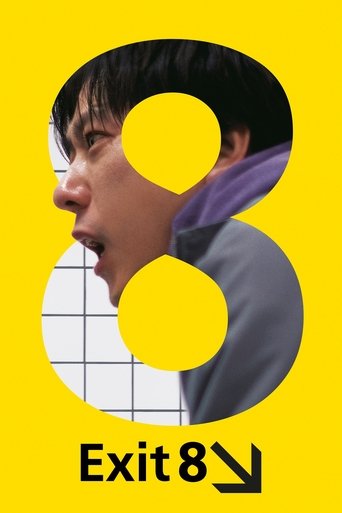
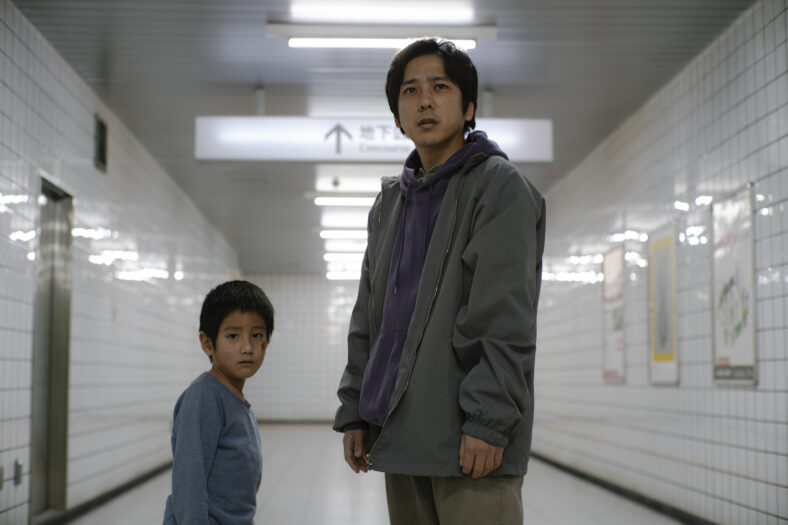
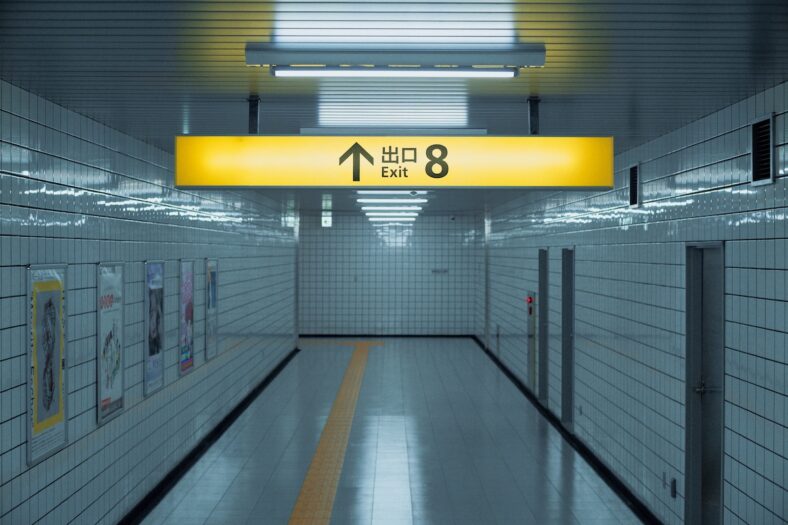
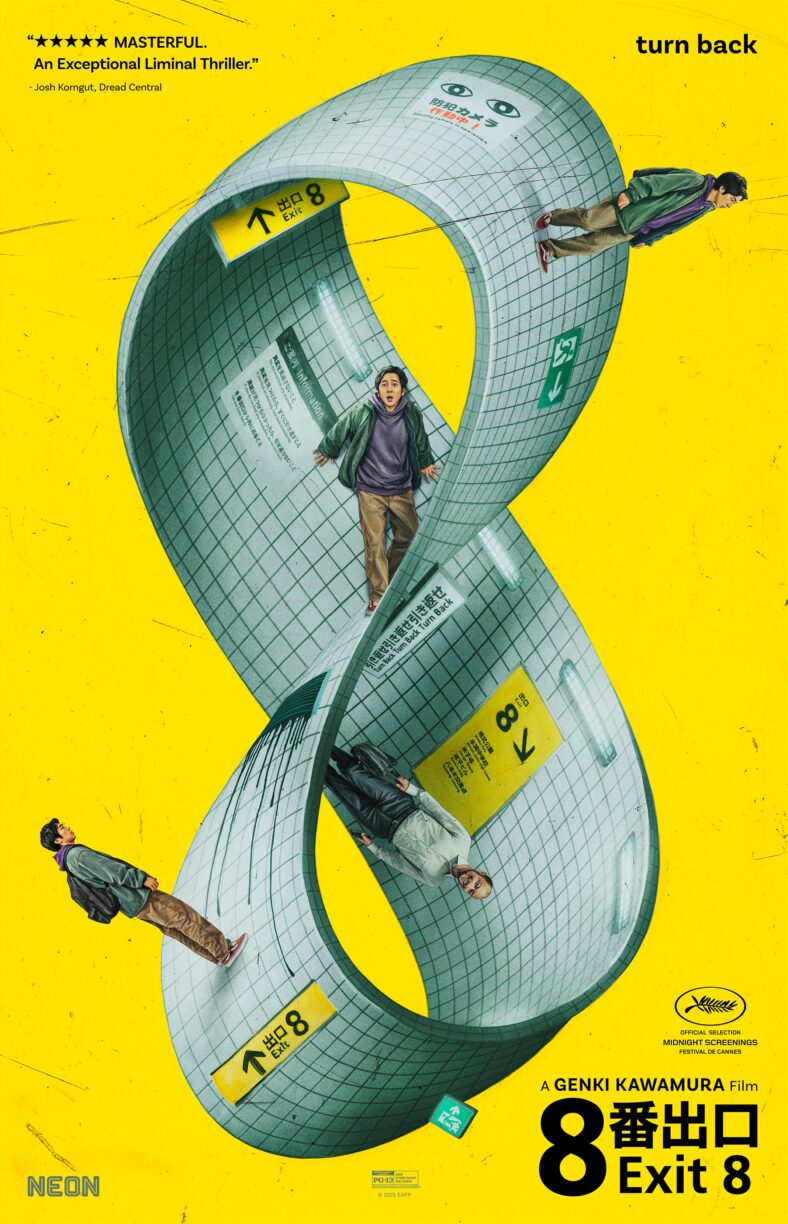
For Dread Central’s April Digital Cover Story, we interview ‘Exit 8’ director Genki Kawamura all about his masterful new liminal thriller.
I’ve long been drawn to a particular strain of horror built around existential entrapment, where the terror doesn’t come from what’s chasing you, but from the realization that there’s literally and figuratively nowhere to go. Genre standouts like Cube, Dead End, and The Shining all operate within that suffocating logic, trapping their characters in systems they can’t fully understand, let alone escape.
It’s a space Genki Kawamura now enters with Exit 8, his masterful video game adaptation that arrives in North American theaters this Friday. Working tightly from its source material game but grounded in a story far more existential, Kawamura’s film plays as a closed loop of perception and dread.
For Dread Central’s April 2026 digital cover story, we spoke with the filmmaker about his liminal horror masterpiece, fatherhood, and the unsettling idea that we may already be stuck inside systems outside of our control…
On themes of fatherhood and liminal horror, and how The Shining becomes the connective tissue between them, Genki Kawamura frames Exit 8 as both forward-looking and rooted in horror tradition.
“In taking a video game and adapting it into a film, on the one hand, we’re doing something very cutting edge. But at the same time, I wanted to tap into a lot of our classic horror greats, which is I think what propelled this into the can and sort of the film circuit, if you will, looking at films like Stanley Kubricks, The Shining. In both stories, the protagonist slowly loses their sense of fatherhood throughout the film, and they were both made in very uncertain times, which I think is very telling of the society we live in right now,” he explains.
“We’re riding these subways, these trains every day. You look around you, everyone’s on their smartphones. We’re seemingly together yet at the same time, very, very isolated. And I think that this isn’t unique just to Japanese trains or subways, that the world at large is kind of headed in that direction where we all seem a little lost.”
Referencing Paprika as a key influence, Genki Kawamura points to the papery boundary between our inner and outer worlds.
“Satoshi Kon’s movie Paprika, which I would consider to be a horror film,” Kawamura says. “In the film, there’s a huge blur between what is in the dream world and what is in the real world, and this idea that you can project what is in your mind into the real world and manifest it affecting change. To me, that idea and concept is much scarier than monsters or ghosts, really.”
Framed against Exit 8’s early success in Japan and its current North American rollout, Genki Kawamura admits that conversations about expansion by way of a remake are already underway.
“Yes. There’s already been some conversation with studios in Asia, Europe, North America about some kind of potential remake, but I think I myself am still kind of stuck in the Japanese exudate corridors and have yet to find my own escape … so perhaps this will be a journey of me giving my blessing as well as overseeing how Exit 8 evolves over the course of time and with each sort of country, background, content, creator, film.”
Asked about the films that unsettled him most growing up, Genki Kawamura points back to the same destabilizing ideas that now define Exit 8, where reality slips and nothing feels entirely trustworthy.
“The Satoshi Kon animated films Perfect Blue and Paprika because they asked the question, ‘Is the world that we live in real or not?’ And for me, that’s one of the scariest moments that I think I could experience or feel,” Kawamura tells me. “And I think a lot of Japanese animators, animation directors have explored this theme quite a bit if you look at the history of Japanese animation. So taking that idea and that sort of horror, that fear, translating for a live action audience combined with this idea of blurring the lines between the video game and the movie medium, blurring lines between the relationship and interface between humans and AI. Likewise, humans and CG, you watch the film, a lot of performances were using live action humans, but acting in almost a very CG NPC character-like way.”
That same collapse of perspective leads into how Kawamura sees himself moving through the world, a mindset that directly reflects Exit 8.
“I commute to the office every day via train and Subway, and while I’m commuting, I think of myself as the main character of whatever story, whatever world this is I exist in. But I’m sure from anyone else’s perspective, I am just an NPC or a mob character in their story,” Kawamura says, adding: “So in this film, no one has a name and everyone is almost like this NPC player. But at the same time, I wanted to show that even within these NPCs and reflection of what they are, that there is some kind of humanity and that they all have their own stories, which is how we arrived at this particular structure.”
And finally, with his ties to the legendary Toho studio and a clear talent for restraint-driven genre adapations, I ask Kawamura whether a foray into the world of Godzilla is something he could ever see himself pursuing.
“Well, I’m a huge fan of the very first Godzilla, and I particularly like how in a lot of the film you don’t actually see Godzilla, but the human fear of whatever Godzilla represents is ever present. So if I were to do a Godzilla film, the extreme version of it would be you would only see the footprints of Godzilla, and it almost is like this projection of fear that the human mind created. But I know that the fans wouldn’t be satisfied by just seeing footprints, so I’m sure I’ll have to find a different way to visually express that, but that’s what I think attracts me to the franchise.”
![‘Exit 8’ Director Genki Kawamura on Crafting His Liminal Nightmare [Digital Cover Story]](https://www.dreadcentral.com/wp-content/uploads/2026/04/exit-8-again.jpg)