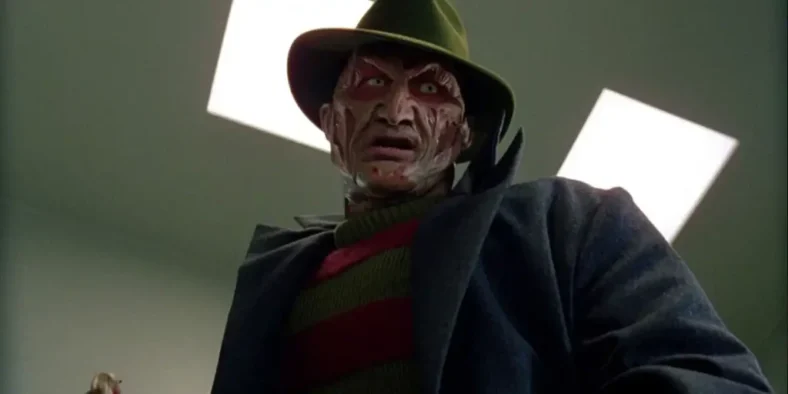
When I first saw A Nightmare on Elm Street 4: The Dream Master, I had never heard of Freddy Krueger, […]
When I first saw A Nightmare on Elm Street 4: The Dream Master, I had never heard of Freddy Krueger, a dream demon who murders his victims by trapping them in nightmares while they sleep. When Krueger (Robert Englund) kills you in your sleep, you also die in real life… and that very much upset my 12-year-old self, who that night instantly developed a crush on a character that met a particularly grisly fate.
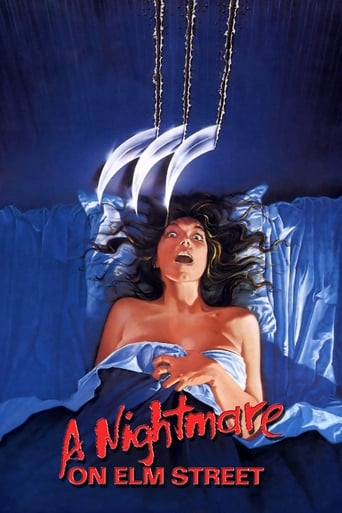
Below is my interview with Sara Risher, who produced the first seven films in that iconic horror series. This means she played a critical role in creating A Nightmare on Elm Street (1984), A Nightmare on Elm Street 2: Freddy’s Revenge (1985), A Nightmare on Elm Street 3: Dream Warriors (1987), A Nightmare on Elm Street 4: The Dream Master (1988), A Nightmare on Elm Street 5: The Dream Child (1989), Freddy’s Dead: The Final Nightmare (1991) and Wes Craven’s New Nightmare (1994). Since these installments tell a self-contained story, it is fitting that Risher’s contributions begin and end there; the last two films, a crossover and a remake, are in many meaningful senses related to the original heptalogy.
On a personal note: As a freshman at Bard College in the ’00s, I roomed with Risher’s son, Nick Risher, without having any clue as to his mother’s identity. Indeed, in my initial meeting with her, I only knew that she had created the 1993 kids martial arts comedy Surf Ninjas, which Nick had shown me days prior in our marijuana smoke-filled dorm room. Because I’m autistic, I often ask questions in a matter-of-fact tone that those I meet interpret negatively when it is simply my affect. For these two reasons, when I asked Risher about Surf Ninjas — again, not knowing that she had produced a movie series I had loved my entire teenage years — I committed a faux pas that she vividly recalled more than two decades later.
Nick, who last October became CEO of Dark Matter TV later told me that she was insulted by my tone when I asked, “Are you proud of ” I intended the question sincerely: I was curious, as an 18-year-old, whether producers who make popular but lowbrow silly comedies (that I may or may not have watched with her son while smoking lots of pot) regarded them as genuine works of art.
When I learned I’d insulted his mother, I was mortified. Then I learned she had helped make a film series I’d adored for years, and the mortification was amplified exponentially.
Fittingly, therefore, this interview about a dream demon who feeds on trauma helped me make peace with my own embarrassing childhood incident. In the interview below, which is lightly edited for clarity and context, Risher helped me make peace with that (admittedly light) trauma… and also spilled a lot of fascinating details about the original heptalogy.
Although we discussed the movies out of order, this has been reorganized and re-edited so that the observations can be roughly linear in terms of the franchise’s internal chronology.
Courtesy of New Line Cinema
Lesson from Film #1: Freddy Krueger is an Abuser
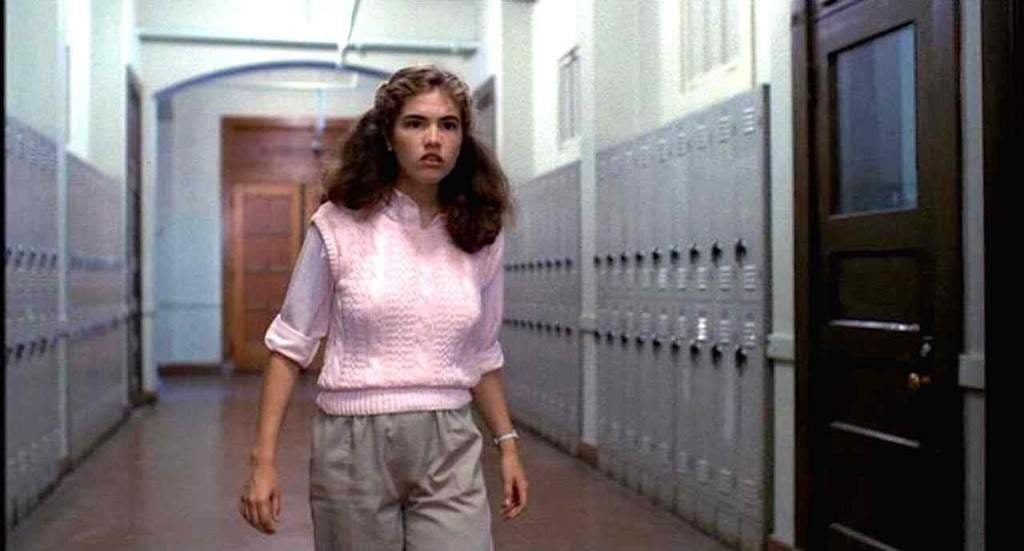
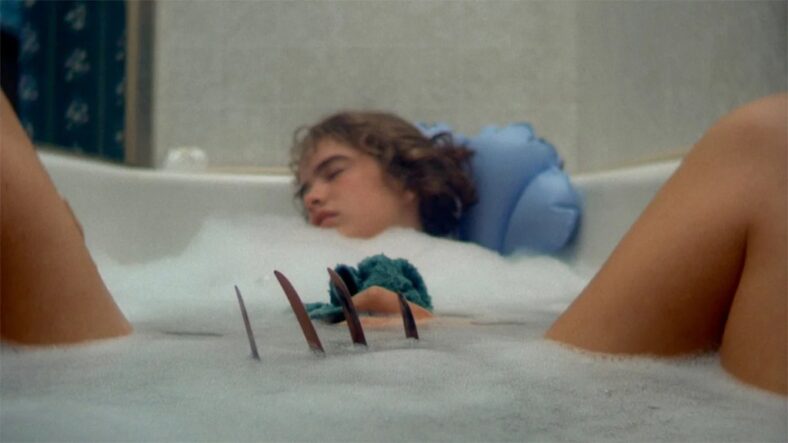
Matthew Rozsa: In A Nightmare on Elm Street, Wes Craven observed that “the notion of the screenplay is that the sins of the parents are visited upon the children, but the fact that each child is not necessarily stuck with their lot is still there.” Robert Englund explained that in A Nightmare on Elm Street, “all the adults are damaged — they’re alcoholic, they’re on pills, they’re not around.” I would argue on a deeper level that the first film has a subtext of children suffering trauma from their parents’ mistakes. That it’s not just in a supernatural sense that the sins of the parents are visited on the children, but that also in a psychological and medical sense, the sins of the parents are inflicted on the children. In this sense, the first film is symbolic about real life. What do you think of that interpretation?
Sara Risher: I completely agree. It’s a very good interpretation.
Rozsa: Can you elaborate? I want to hear from the producer.
Risher: [Laughs.] No, I have to elaborate. Yeah, well, definitely it was always about the sense that the parents were reflected in — or the children were paying for — the sins of the parents. But they didn’t really know what had happened to Freddy. So I think there was an innocence about them. But yes, they probably had to bear the brunt of the sins of the parents. You realize, though, there’s something — just like Trump calls something a just war, or something a just murder. Freddy had been molesting children, and so the parents got together, and they killed him. Now, okay, it’d be better to send him to jail, but when you’re an outraged parent, I really think they were justified. Still, they had horrible guilt, and the children inherited that subconsciously.
Rozsa: In the philosophical sense that A Nightmare on Elm Street is about children suffering because of their parents’ mistakes — being in a world where you are doomed because of factors you can’t control, indeed because the people who were supposed to take care of you failed you. Is that not what has happened in a quite literal sense right now?… The movie is about, as you said, child sex abuse. My question for you is: do you think that maybe in a philosophical sense, A Nightmare on Elm Street is about children suffering because of their parents’ mistakes — about being in a world where you are doomed because of factors you can’t control, because the people who were supposed to take care of you failed you?
Risher: Absolutely.
Rozsa: I would also argue that you have characters who are neglected, who are addicted to substances, who were sexually abused, who suffer from poverty, who are just in general not well mentally — and that Freddy Krueger was deliberately written as a manifestation of those traumas. The character is therefore universally applicable. It’s not that he was written to represent any one thing, but rather that the universal theme of predatory evil targeting children, and the parents who are supposed to protect those children failing them, is a theme as old as time. What would you say to that analysis?
Risher: Excellent. [Laughs.] It’s hard to contribute, Matthew, because these are really good summaries of what the film was about. I think that’s an excellent concept. The challenge is that the first movie has been analyzed by so many scholars. But let me just say — these were how many years ago? Forty years ago. So my knowledge of it, having not read a lot about it, is somewhat shaky.
Rozsa: I understand that and I appreciate it. I’m not going to push if you feel like your memory doesn’t hold up. This is a very important interview for me because I’m a huge fan of the series. I did not know your connection to it when your son Nick became my college roommate. We were friends for a very long time before he really divulged what his parents did.
Risher: I remember something you said to me — I’ll never forget it — and I can’t remember which film it was about. It was either Ninja Turtles… not Ninja Turtles…
Rozsa:Surf Ninjas. I remember exactly what it was.
Risher: Yeah, Surf Ninjas. And you said to me, “Are you proud of having made that movie?” And I was thrown. I said, “Well, yeah, I am.” But you said it as a derogatory thing, I think.
Rozsa: No, I did not. I am autistic, and you might have noticed in this interview that I ask very unusual questions. The reason I asked if you were proud of it is because it’s such a silly movie that I had to wonder. I still wonder, do you feel the same pride in a silly little spoof that you do in A Nightmare on Elm Street?
Risher: Yes, I did. I enjoyed the whole making of it. It was really fun. My boss said, after Ninja Turtles, “Let’s get that Asian kid who was so popular in Ninja Turtles and write a movie for him.” So I hired a writer, we figured out a story, and I thought it was terrific.
Rozsa: I agree that it’s a lovely movie. And you have to remember — your son’s stoner autistic freshman roommate had not yet figured out how to hone his desire to ask probing questions with the art of diplomatic phrasing. I think I have refined my abilities in the subsequent 22 years.
Risher: Oh no, you’re doing amazing. These questions are so intellectual and have so much depth. I’m very impressed.
Courtesy of New Line Cinema
Lesson from Film #2: The best intentions sometimes have unintended consequences
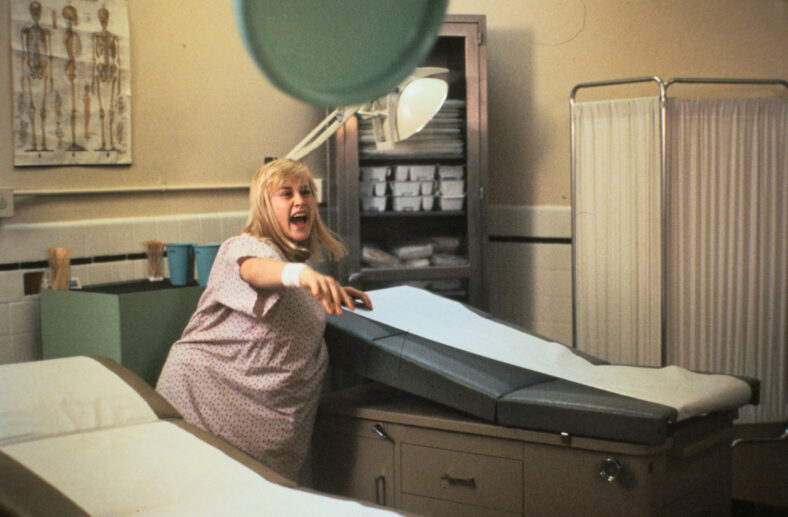
Rozsa: Now, part two, Freddy’s Revenge — that movie has, as I’m sure you’ve heard, a homoerotic subtext…
Risher: We didn’t intend that at all. I just had lunch with Jack Sholder recently, and we were just laughing about it. Neither he, the writer, me — none of us had that intention. It turns out we had cast a closeted gay guy and he accuses us of exposing him. And when we look back on it, we realized there were a lot of things — like the shower scenes with the coach — there were quite a few scenes that were erotic, but it wasn’t intended by us.
Rozsa: Let me ask you this — I’m looking up what Mark Patton said. He cited: “I’m lying in bed, and I’m a pietà, and the candles are dripping, and they’re bending like phalluses and white wax is dripping all over. It’s like I’m at the center of a bukake video.” What do you say about that?
Risher: None of it was intentional. I gotta tell you, I love the fact that that’s true, because in some famous movies I’ve read about, they said the candle was red and when it went out it symbolized such and such — and none of that was intentional either. A set designer just put a red candle, and it went out. So I love that we didn’t intend that at all.
Rozsa: I appreciate that. Mark Patton said in a later interview that “nobody ever affected my confidence — the boys that threw rocks at me, nobody — but this man did.” He was referring to David Chaskin, the screenwriter.
Risher: What did he say?
Rozsa: He felt that this movie made him feel bad about himself — that he’d been outed.
Risher: Yeah, he was outed. But we didn’t know that. We didn’t know he was gay. I guarantee you — I helped pick him. Jack Sholder is a friend of mine still. Maybe deep down there were homoerotic concepts and ideas that the director and the writer enjoyed putting in there, but it wasn’t intentionally considered a gay movie. None of us — even Jack Sholder — did not know that the boy, what’s his name again?
Rozsa: Mark Patton.
Risher: We did not know that he was gay.
Rozsa: I believe that absolutely. And that’s what I’m going with — I completely agree with that interpretation. I’m simply doing my own research on it.
Courtesy of New Line Cinema
Lesson from Film #3: People don’t listen to you when they label you as crazy
Rozsa: Thank you. So let me move on to Dream Warriors, the third film, which has not received as much academic analysis as the first. The subtext I want to point out is of mentally ill characters who are not believed. I am confident to admit that I’ve been to rehab — I am a recovering drug addict — and I know that when you’re in a facility as an inpatient, the doctors often treat you like you’re a criminal, like you’re “crazy,” like nothing you say can be relied upon. The third film is basically about that: the characters aren’t believed because they’re deemed to be crazy. How much was that deliberately the subtext, and how do you think it holds up forty years later?
Risher: I think it definitely holds up forty years later. People with mental health problems or drug problems are dismissed so often in our society, and the kids really can suffer from that. That was true at the time, and it’s true now. But they rose to the occasion. That’s what I love about our films — the kids, and often the women, rise to the occasion, overcome their flaws and faults and their upbringing, and deal with Freddy. I had a lot to do with making the women strong in these films.
Courtesy of New Line Cinema
Lesson from Film #4: Strong female characters work only when they are well-written
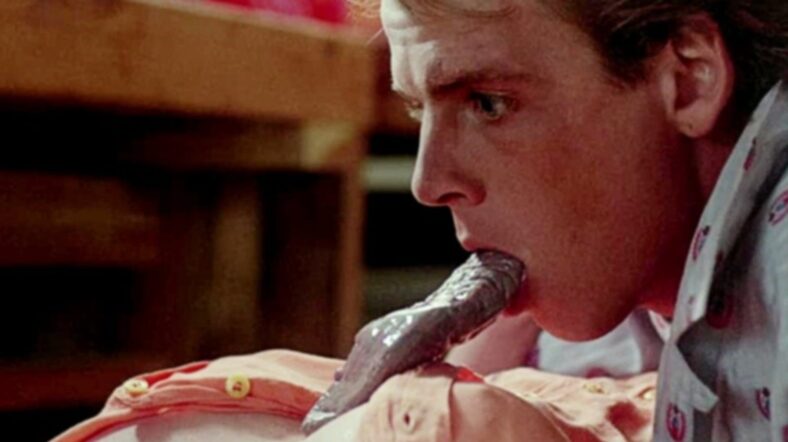
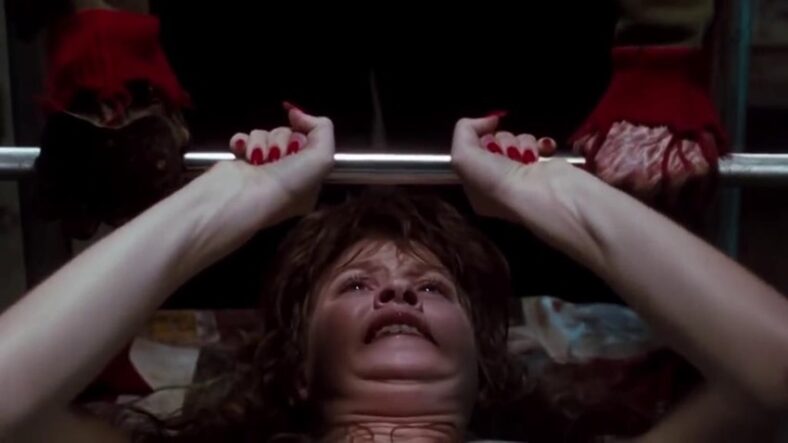
Rozsa: You’re right. And that brings me to The Dream Master. When I saw part four, I had a massive crush on the character Debbie the weightlifter. I thought she was gorgeous. And in the scene where Freddy tries to push down on the weights, and she lifts up, I was rooting so hard for her — and was so unhappy when it turned out quite differently, to put it mildly. Do you have other stories of fans coming up to you and sharing anecdotes about individual scenes and characters that really resonated with them?
Risher: Oh, again, this is forty years ago, so I can’t necessarily recall everything. But a lot of people associated deeply with Nancy. People would come up and talk about Nancy all the time. What I loved about Nancy — that was Wes Craven who cast her — is that she was so sweet and innocent, the girl next door, and boy did she rise to the occasion. That was the trouble with the remake of Nightmare. That director cast a very aggressive woman whom you’d have expected to be able to fight Freddy. But then he had her boyfriend fight Freddy. He brings Freddy into the world and attacks him. Those two things were totally against what we wanted, which was this sweet, innocent girl learning how to fight for herself, defend herself, and defend her friends.
Rozsa: It completely removes the empowerment theme.
Risher: Totally. It was just awful. The casting in that movie is what made it not work, I think.
Lesson from Film #5: The movie isn’t intentionally pro-choice… but yes, the producer agrees with “My Body, My Choice”
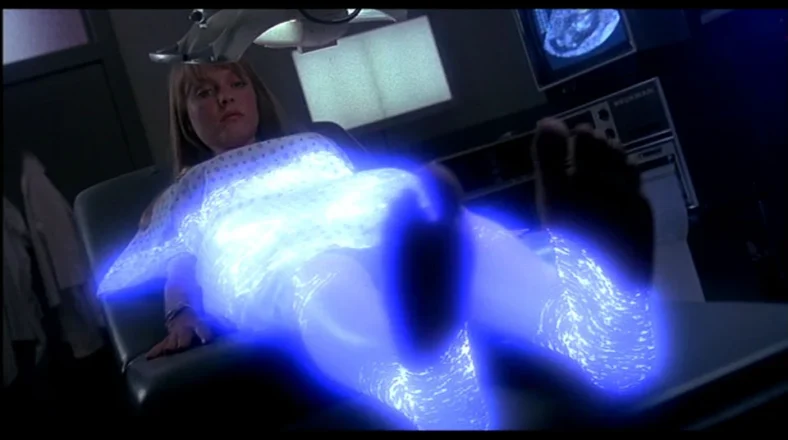
Rozsa: Now, moving to the fifth film, The Dream Child— some people criticized it for being pro-life, but I actually disagree with that interpretation. I argue that it’s pro-choice because Alice vehemently asserts her right to decide what to do with her body, despite being pressured by the child’s paternal grandparents to surrender custody because of her mental health. Her decision to keep the child can therefore be viewed as her asserting agency over her mind and body — and that is as much a pro-choice message as her having an abortion would have been. How do you feel about that?
Risher: Exactly that. Absolutely. I wanted her to have the choice. I didn’t want her to just say, “Oh, I’m pregnant, I gotta have the baby.” And I obviously didn’t want her to have an abortion, but I wanted it to be her choice.
Rozsa: Why didn’t you want her to have an abortion?
Risher: Because I didn’t believe in abortion. And also, it wouldn’t be good for the movie.
Rozsa: You thought it would have been bad for the box office?
Risher: Yeah. I thought she needed to have that child, plus — yes, bad for the box office, you’re right. Probably because half the nation’s anti-abortion. It’s not that I’m anti-abortion; I just wanted her to have the baby. So I didn’t give her much choice myself, but I wanted to make it clear that it was her choice.
Rozsa: I personally do not believe in abortion, but I also believe every human being should have the legal right — that women should have the right to have an abortion and that the government should not be able to deny them that.
Risher: Absolutely!
Courtesy of New Line Cinema
Lesson from Film #6: They can’t all be winners
Rozsa: Now on to part six, Freddy’s Dead: The Final Nightmare. I’ll be honest — of all the movies [in this series] you produced, it is my least favorite.
Risher: A lot of people would agree with you.
Rozsa: I don’t dislike it. It just has the fewest memorable moments. I hope you’re not upset with me saying that.
Risher: Of course not.
Rozsa: Good. And by the way — after all these years of you thinking I didn’t like Surf Ninjas, I want to dispel that myth once and for all: I did like Surf Ninjas. I just didn’t know how to phrase my question. I genuinely like it a lot more than I like A Nightmare on Elm Street Part 6. [Laughs.]
Risher: I just remember that moment so well — that was when I first met you.
Rozsa: I know. You should be proud of every movie you’ve made. But Nightmare Part 6 — it’s just a little flat. What do you think?
Risher: We were tired by then. I think we never would have made another one if Wes hadn’t come up with the idea for the seventh film. He came to us and said he didn’t like Part 6 either, and that he had an idea — and it was so original.
Courtesy of New Line Cinema
Lesson from Film #7: It can be fun to die (in the right context)
Rozsa: That brings me to my final question, about Wes Craven’s New Nightmare. The first time I saw you on screen was in that film. What was it like being, in effect, a character in your own series?
Risher: It was so much fun. I’ve never done anything like that before or since. What was interesting was that I had to play myself. People said, “Oh, did you have trouble knowing your lines?” And my lines were, “Hi, I am Sara Risher.” [Laughs.] So I had no trouble remembering them. I just loved being a part of it. And Wes was directing — I loved Wes — so it was just a great thrill. People think I’m in it much more than I am because I’m always on the phone saying, “Hi, this is Sara Risher.” But I was actually only filmed in one scene.
Rozsa: Did you ever want Freddy Krueger to kill you in the movie? I was wondering why Robert Englund didn’t have Freddy kill him — why the creators of this character didn’t have their creation turn on them. It could have been a Frankenstein moment. You’re murdered by your own creation.
Risher: That was sort of leading to that — that was some of Wes’s intention when he came up with it. I don’t know how it evolved in his head. But ultimately, I was fine with not being killed.
Rozsa: Please don’t think I want you to die. I just think — if I could ever be in a horror movie, I’d want the killer to kill me. Not in real life, obviously, but if you had ever said, “Matt, do you want to be in a Nightmare on Elm Street movie?” — please have me die. Have him cut off my head. I want to be a memorable kill, because that’s what people remember.
Risher: I’m sure all the people we killed love being killed.
Rozsa: I think being killed by a horror villain is the ultimate compliment.
Risher: Absolutely. I was just as happy not to be killed, because I did have a young son, and I just loved being a mother, so I was very happy to live through it all.
Rozsa: I want both of us to live to be 110. [Laughs.] But let me ask my final question: In my opinion, New Nightmare is the film in the series that most directly explores the philosophy and psychology behind the character of Freddy Krueger. What do you think the character represents about trauma? Why does he resonate so deeply with people?
Risher: Well, like you say, it was about trauma — but also very much to do with parents and children. No parent wants to harm their children, and the guilt that they felt because of what they did had a very strong effect on everybody. I think New Nightmare was supposed to show that even we, as filmmakers, had brought this guilt to light and to life — that we had exposed what happens when parents do bad things and how it passes down through generations. It was trying to show that what the parents did was not the right thing and that it affected their kids. And then, for us to have written about it and exposed it — that made Freddy, or the villain, want to get back at us. I don’t know if that’s answering your question or not.
Rozsa: It answers it quite thoroughly. Thank you so much for taking the time to speak with me!
Sara Risher served as producer on A Nightmare on Elm Street (1984) through Wes Craven’s New Nightmare (1994). Matthew Rozsa is a senior editor at AlterNet and freelances for Dread Central.