Chad Collins revisits the first trailer for ‘The Woods,’ later revealed to be ‘Blair Witch,’ as a defining moment in horror history.
Horror movies, and movies in general, really, are products. Yes, they’re art, too, and I’d die by the sword to defend the intrinsic value of storytelling in our culture, but within the moviemaking framework we know now, they’re means to an end. That end is money. Even the most austere and subversive titles are financed with the intent of finding an audience and emptying their pockets, and that means, like all products, movies first need to be marketed. Tell the world they exist and hope you’ve sufficiently convinced them to spend an evening at the movie theater.
The sheer volume of titles being released today across streaming, multiplexes, our phones (I have no shame admitting I’ve been suckered into short-form romance reels a few times) has signaled a cataclysmic shift with how movies are packaged and sold. The antecedent days of television spots, a poster, and a green-band trailer are behind us. Now, there are con panels, influencers, social behind-the-scenes gimmicks, and even texting campaigns, all of which are intentionally developed to sell tickets. But maybe it’s all just Occam’s Razor. A decade ago, Blair Witch, formerly known as The Woods, proved just that.
There’s a fundamental rule of horror that contends what’s not seen is more frightening than what is. Our intolerance of uncertainty and the profound power of our imagination are always going to conjure scares more frightening than what the human mind, however creative, can literalize. Horror marketing, recently, has really leaned into that. Distributor Neon, for instance, scored their best ever opening weekend in 2024 with Oz Perkins’ Longlegs, largely on account of a guerrilla marketing campaign that concealed what the movie was actually about. It was all vibes, symbols, cryptic messages, and speculation, and that lit a fire among not just horror fans, but moviegoing audiences in general.
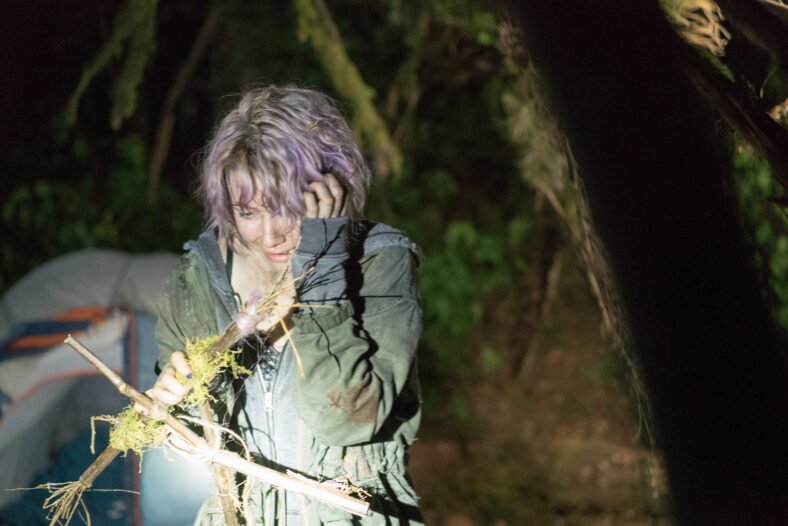
It’s not the first time, but I was too young for Cloverfield, too old and cynical for Longlegs, so the guerrilla campaign that resonates best remains Adam Wingard’sBlair Witch, released in September 2016. Months before, on June 2, the first trailer was released. Only, the film in question wasn’t titled Blair Witch at all. It was titled The Woods.
The short spot, coming in at just under one-and-a-half minutes, is set to an eerie, slow cover of The Police’s “Every Breath You Take.” A drone shot slowly glides across a wooded treeline as text from our current Editor-in-Chief, Brad Miska, reads, “A new beginning for horror films.” Then, there’s text from Joshua Rothkopf of Time Out New York reading, “A nightmare of classic proportions.” Jimmy O. of JoBlo concludes with the text, “Chilling and intense… a truly terrifying cinematic experience.”
Now, I’ve conceded before that early access, whether direct or at a festival, often clouds judgment. Not always, but with horror especially, the impulse to be first rages, and it’s why so many festival hits are marked as the scariest ever, only for that to not really be the case. It’s compounded by a sense of community, too, and it accounts for why I had wildly different experiences seeing Presence at Sundance versus my local theater, for instance. And, yes, while Blair Witch’s tactics are commonplace now, they weren’t at the time, and the pull quotes worked remarkably well to sell me on whatever was happening in those damned woods. I wanted to be scared. And I hoped I would be. The trailer features Brad again, hailing The Woods as “One of the scariest movies ever made.”
The remainder of the trailer features a bunch of quick cuts between panicked faces, found footage running, possible body horror, and more. “This year, there is something evil hiding in The Woods.” To arrive at the point, I remain convinced it’s one of the most effective horror movie trailers ever released. I was obsessed. Probably watched it three dozen times. 2016 was still distinctly digital, but I wasn’t nearly as chronically online. I had no idea what The Woods was, but I knew I wanted it immediately.
Of course, internet sleuths were quick to deduce that The Woods was likely a Blair Witch sequel. Prior to the 2000s, unless you recorded trailers on VHS, no one was picking through them frame by frame. Now, with internet trailers, same-day breakdowns are posted across Twitter, YouTube, Reddit, and more. I avoided most of that in 2016, so I only knew the truth of The Woods when, on July 22, Comic Con audiences were treated to an early screening that, sure enough, revealed the film to be a stealth Blair Witch sequel.
Marketing Blair Witch was always going to be a losing battle, really. $45 million globally against a $5 million budget isn’t bad at all, but Wingard’s sequel had nowhere near the cultural cache as the original. Despite early praise, critical reviews plummeted, and now, Blair Witch is most commonly regarded as the worst of the Blair Witch universe (given Book of Shadows’ contemporary reappraisal). I firmly disagree, of course. I think Blair Witch is terrifying, and it certainly ranks among the scariest experiences I’ve ever had in a theater.
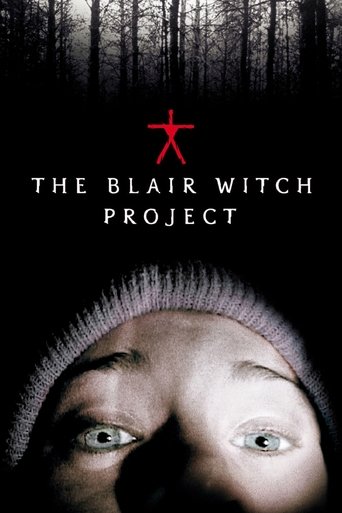
It’s not anywhere near as scary as the original, but nothing ever will be. The Blair Witch Project was an accomplished mockumentary, but its impact is also largely a matter of fortuitous timing, the kind of singular release that will never be remade. Paranormal Activity similarly vibed with its “Demand It” roadshow campaign several years later, but even that movie knew better than to purport to be true in an era of dying Ask Jeeves and the gargantuan Google machine.
However, I echo the sentiments of Brad Miska. In his contemporaneous review, he wrote, “Moviegoers understand the basic structure of a story. So, while someone watching Blair Witch may think they know what’s going to happen next, they don’t. The film breaks the mold of traditional horror and pushes the boundaries to the absolute brink.” Brad joked that I could cite him, even if he worried he’d draw the ire of the internet all over again (like he did in 2016), but I’ll take the front line here and say I wholly agree with him.
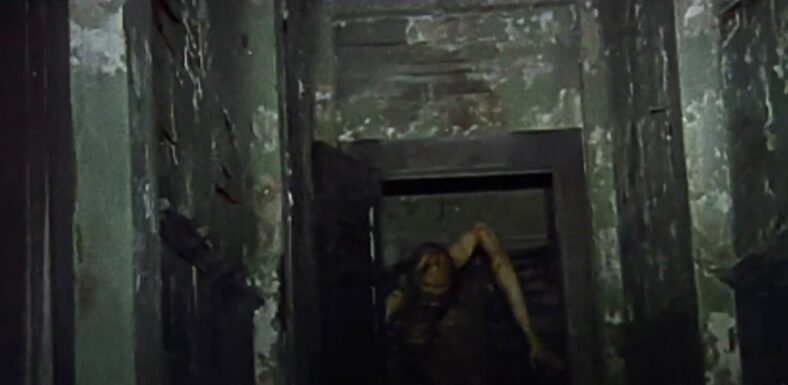
2016’s Blair Witch is an evil movie. It’s cursed in a way few are. Not on account of mythology or lore, but strictly because it’s an assaultive sensory experience. Loud, chaotic, unpredictable. The stick figure death (those who know, know) is an all-timer. In fact, nothing has rattled me quite as much in the decade since Blair Witch’s release. That’s not for nothing, and plenty of films have tried.
And its resonance, perhaps, does have to do with the marketing. In an era of dwindling mysticism, there are stalwart warriors doing the cinematic lord’s work. Neon, as mentioned, comes to mind, and I’m equally fascinated by rumors that David Robert Mitchell’s The End of Oak Street might secretly be a Cloverfield spinoff. That kind of stealth release is harder and harder to accomplish these days. But a trip into the Black Hills Forest yields all the answers. Blair Witch 2016 knocked it out of the park. A trailer anniversary may not seem conventional, but in this case, it absolutely is. We’re getting another sequel, sure, but nothing quite like the polarizing powerhouse of Wingard’s take a decade ago. At the time, I was scared to close my eyes all over again.
![Remembering When ‘Blair Witch’ Was ‘The Woods’ [Anniversary]](https://www.dreadcentral.com/wp-content/uploads/2026/05/blair-witch-still.jpg)