Matt Konopka looks back at Robert De Niro’s portrayal of Max Cady in ‘Cape Fear’ (1991) and why it’s his scariest performance.
Robert De Niro has had his fair share of roles that set viewers on edge over his career (many of them with director Martin Scorsese). There’s his iconic portrayal of vigilante Travis Bickle in Taxi Driver (you talkin’ to me?). The intensity of boxer Jake La Motta in Raging Bull. Mob boss Al Capone from The Untouchables. Too many to list, or we’d be here all day. He’s also appeared in numerous horror films, either as the villain or a misunderstood monster, from the devil in Angel Heart to the Creature of Frankenstein and a schizophrenic killer in Hide and Seek. Hell, he even makes you shift in your seat as the father-in-law from hell of Meet the Parents. But it’s his role as the vengeance-fueled Max Cady in Cape Fear that remains his scariest.
I found myself considering as much as I watched Apple TV+’s new “Cape Fear” series, from showrunner Nick Antosca (“Channel Zero”). The new take fully intends to up the shock and gore, the opening title appearing over a wall splashed with blood. Executive-produced by Scorsese (who directed the 1991 film), Antosca’s vision walks hand in hand with previous iterations. At its best, it even feels like Scorsese’s film. Most importantly, Javier Bardem (playing Cady this time) makes his presence known. He’s a quieter, calculated version of the character, with the smooth-talking charm of Satan himself. Despite that, I couldn’t help thinking, “he’s no De Niro, though”.
That’s not a knock on Bardem, an actor I love and adore in just about everything he touches. More of an acknowledgment that De Niro’s portrayal is one of those iconic performances that smashed into cinemas like a furious earthquake. One that went on to be referenced, spoofed, and revered across multiple platforms for decades. Why? Because it’s really, really scary.
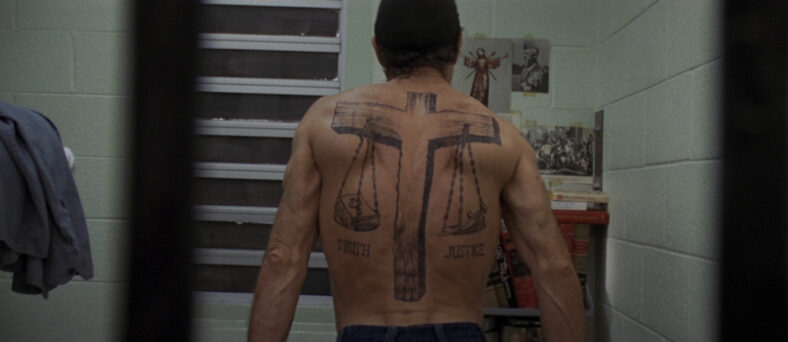
We first meet Max Cady in prison just as he’s about to be let out. Lean muscles flexing while he exercises. “Truth” and “Justice” tattoos so large on his back that they’re no mere body art. They’re statements. Philosophical ideals. A mission that has become the man’s entire existence. Truth, and justice…or at least, Cady’s version of them. As he walks out of prison, a lightning storm rages above him, shrouding the scene in a Southern Gothic atmosphere. Camera low, we look up at Max, awash in the glow of electric bolts. He’s no longer a man. He’s the monster in the castle that we’ve always been told to fear. A bloodsucking vampire once locked away in a tomb, but out now. Free to roam as he pleases. A nightmare incarnate that has just been unleashed and is coming for the man who wronged him.
That man is Sam Bowden (Nick Nolte). A lawyer who withheld the evidence from the court that the woman Cady was sentenced for raping was “promiscuous”. Obviously, that shouldn’t matter. We’d all love to believe that a jury wouldn’t dismiss the case because the woman was sleeping around. Rape is rape and nothing, I mean nothing, excuses it. That’s kind of the point, though, and what Scorsese means to address here. A terribly flawed “justice” system that’s often anything but. One that’s willing to dismiss rape charges with a counter of “well, she was asking for it”. No, she wasn’t! But it happens. And it’s awful. And it makes Cady’s lust for vengeance that much more despicable.
Here’s a man who has spent fifteen years craving revenge. Not for jail time over a crime he didn’t commit…but for a prison sentence he could’ve escaped entirely had it not been for the rare instance of his defense attorney, Sam, deciding he’d rather see Cady in jail than win the case. That’s part of the horror, isn’t it? The moral dilemma that Sam faced. Do his job as required by law, defend the client (no matter how monstrous they are), or see to it that an evil man be put behind bars. He chose the latter, and it brings the fury of Hell upon him.
But not just Sam. No, that would be too easy. Cady goes after everyone Sam loves, and that includes his family. Specifically, his wife, Leigh (Jessica Lange) and his teenage daughter, Danielle (Juliette Lewis). Even more specifically, Cady sets his sights on Danielle, leading to many of the film’s squirmiest moments. Through manipulation and southern charm, Max convinces the underage teenager that he isn’t such a bad guy. He even forces her to have a crush on him. And I do intentionally say “forces”, because Danielle is basically a kid who doesn’t know any better. Cady takes advantage of her mind and body.
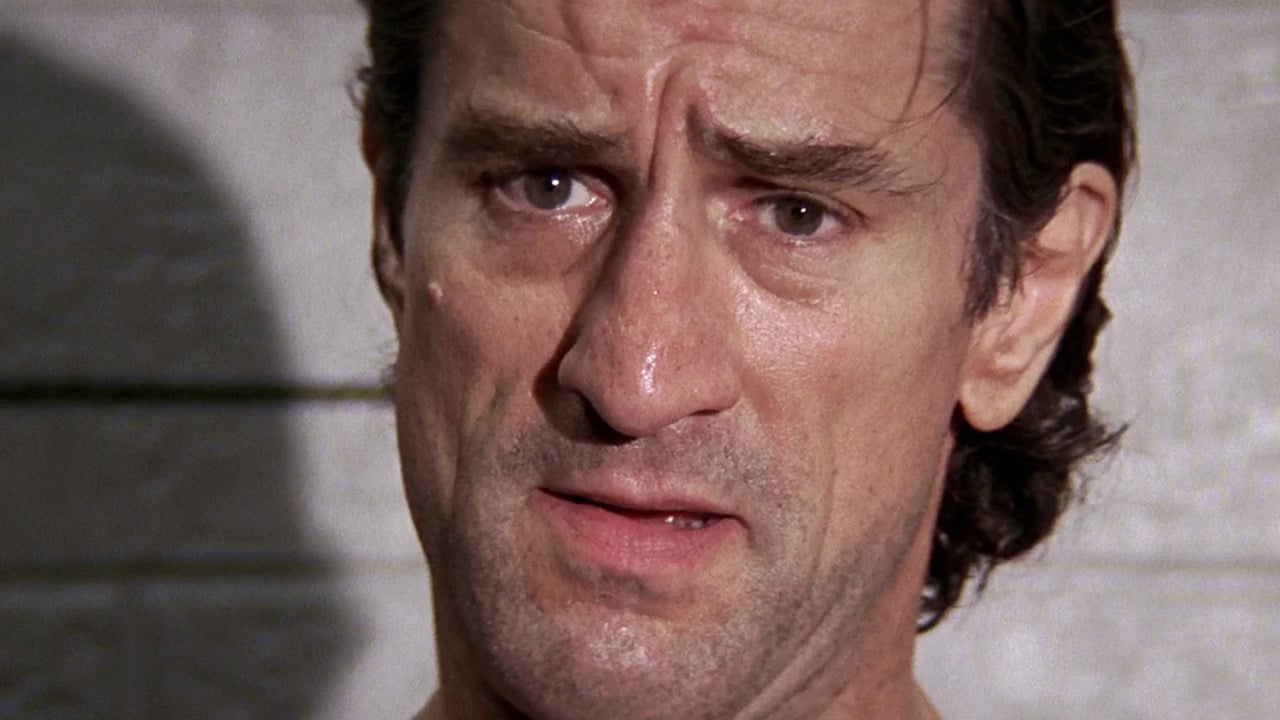
One of three of what I’d call excruciatingly uncomfortable moments comes when Cady pretends to be a teacher and coerces Danielle into meeting him in the school theater by herself. Once realizing who he really is, the girl shrugs off the shock of the lie and is swayed by Cady’s advances. She sucks his finger. They kiss. A disgusting, despicable act by the villain, and one we expect to get worse at any moment. Because De Niro has a way about him. The man is a master at projecting violence through silence. He needs to only look at you, perhaps with a disarming smile in his eye, for you to know that you’re in danger. At least when he’s playing a character. The real-life De Niro is a sweetheart, further emphasizing this (and many other roles of his) as masterful performances.
That moment, it’s sickening. Feels too real, too tragic, too goddamn awful to watch. But it’s there because it reminds us of how much of a monster Cady truly is. The lengths he’s willing to go to punish Sam and satisfy his own twisted desires. It also speaks to the horror of the so-called “justice” system, one that fails time and again to hold men like Cady to account. The Epstein Files, anyone? How many of the men mentioned in them are in prison now? We live in a “boys will be boys” country that consistently excuses such actions as rape and the sexual abuse of young women and girls. Kids. And Cady? He’s the embodiment of that horror. A walking, talking reflection of the men who are allowed to continue as if nothing happened, while their victims’ entire lives are destroyed.
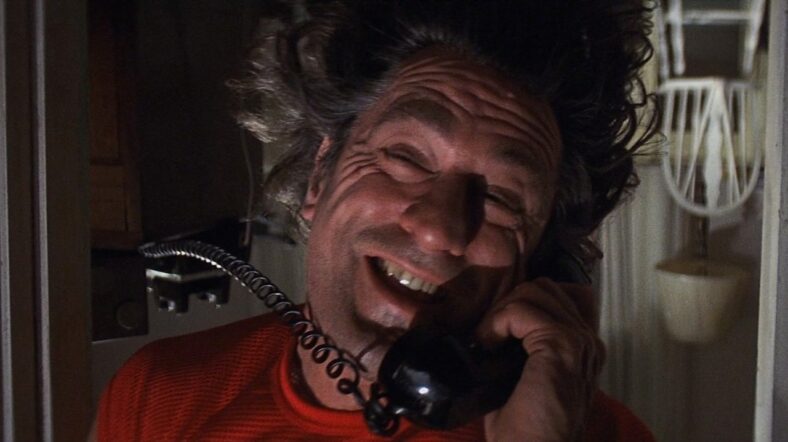
That brings us to the tragedy of Sam’s mistress, Lori (Illeana Douglas). After Sam blows her off, she runs into Cady at a bar (obviously not coincidental). He manipulates her with that snake tongue of his, gets her to sleep with him. Allow herself to be tied up. Only for him to unleash the violence we as the audience are already aware of. De Niro’s sudden flip from charm to rage prickles the skin in and of itself, but the terror doesn’t stop there. In what is a soul-shattering moment from Douglas, the character expresses that she won’t press charges against Cady, because she works in the court system. She knows she’ll be asked things like what she was wearing, had she been drinking, etc. She knows she’ll be judged…that implications will be made that it was her fault. And she can’t go through that. Most can’t, nor should they ever have to. But again, that’s the horrific, backward system we have, and just part of why men like Cady are rarely held accountable. His is a terror that stretches far beyond a single incident. His reign of horror spans a lifetime.
As if all that wasn’t enough, De Niro’s Cady goes further still than just a representation of a failing justice system and men not held accountable for their crimes. He’s the symbol of American rage. He is all the violence, the madness, the unfiltered hate and everything else that’s awful coursing through the veins of this country. Scorsese’s going for more than a great shot when we see Cady sitting there, watching the Bowden house with a backdrop of Fourth of July fireworks (though, yes, it’s an iconic image). The scene forces audiences to reckon with the fact that Cady isn’t just an evil man but the product of a system that has never been run by angels, either.
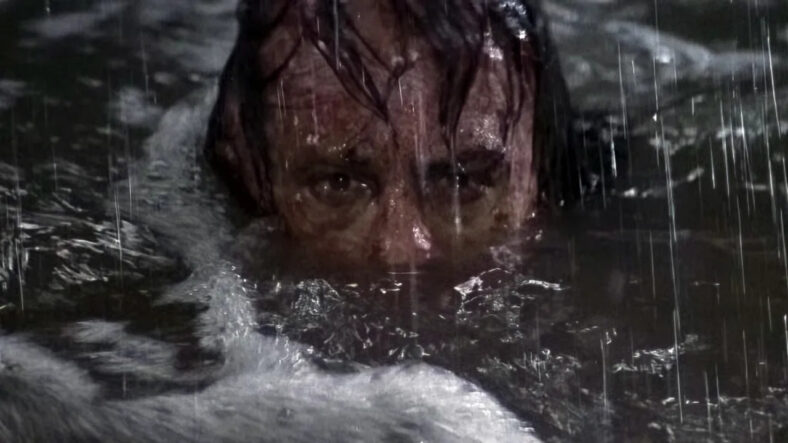
Cady embodies the vicious, bloody violence that you can find in the streets of the U.S. on any given day. His final horror comes in the form of both attacking Sam’s family and reducing the man to a fury he didn’t know he was capable of. I get chills just thinking of Nolte standing there, hands covered in blood, as he raises a boulder, screaming and about to bring it crashing down on Cady’s skull. Those same chills reach even deeper into my bones as I consider the last image of De Niro, trapped and sinking in the river. He doesn’t gasp for air or call for help. He just stares. Into Sam. Into us. Into the very soul of America. Nothing left in him but a hate that can never be satiated.
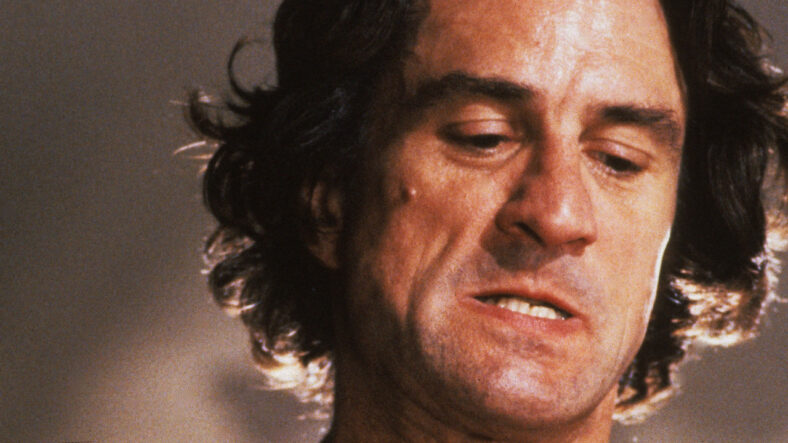
De Niro has played everything from mob bosses to hitmen, obsessive fans, and psychopathic vigilantes. He’s played men driven by greed, corruption, and violence. In each of them, De Niro gripped the audience at the heart and quickened their pulses. But, as far as I’m concerned, none quite reach the level of horror that he does with Max Cady. It’s a performance you don’t easily forget. Can’t forget. One that makes you uneasy every second he’s on screen, and for weeks afterward.
In Cady, De Niro reflected at us everything awful that lurks within our society, much of it out in the open and daring us to stop it. And he has never been nor will ever be as deeply and utterly terrifying as that.