‘Camp’s’ Quiet Queer Magic Enraptures [Chattanooga Review]
‘Camp’ is a quietly magical, lo-fi coming-of-age story whose supernatural undertones augment its big, beating heart.
![‘Camp’s’ Quiet Queer Magic Enraptures [Chattanooga Review]](https://www.dreadcentral.com/wp-content/uploads/2026/06/CAMP_Avalon_Fast_Key_Still-FF_JPG_color_correct-scaled-e1781661636362.jpg)
Avalon Fast regularly trades in vibes. Honeycomb, her feature debut, was a love-it-or-hate-it folk horror hybrid that unsettled and enraptured with its distinct brand of feminine ambiguity. Camp’s (showing at this year’s Chattanooga Film Festival) vaguely supernatural sensibilities augment Fast’s self-described “girl horror” subgenre. Camp champion Jane Schroenbrun has their own camp spectacle coming later this year with Teenage Sex and Death at Camp Miasma, though this Camp fits firmly within the kaleidoscopic, deeply felt genre filmmaking Schroenbrun has become best known for. I saw the Camp glow, and it was glorious.
Composer Max Graham channels Brian Eno witchcraft in Fast’s angst-ridden dreamscape. Emily (Zola Grimmer) is marred by tragedy. In her Gen-Z post-ironic way, she shares one such incident at a low-key, thrumming party. She once struck and killed a little girl with her car. That’s not the vibe (lemon seltzer is), so she absconds with her friend for some analog coke in the passenger seat. Said friend overdoses, and wracked with guilt and grief, Emily (at the behest of her father) joins a Christian summer camp for troubled youth deep in the woods. The time away and spent in nature intended to ameliorate her pain.
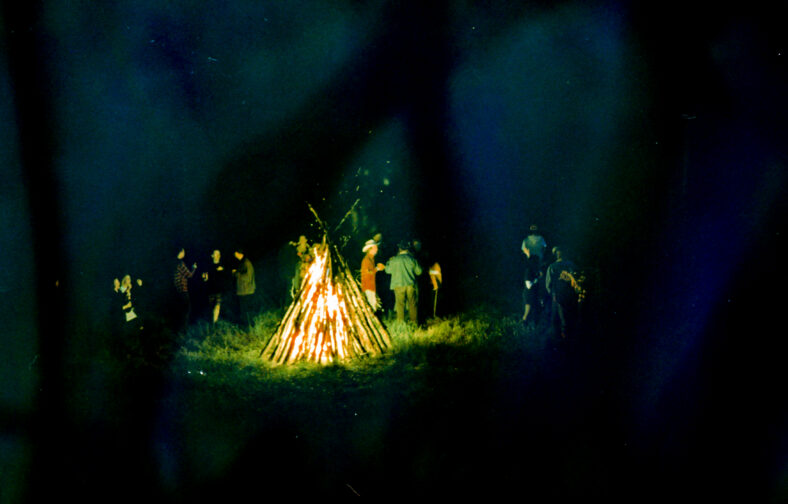
The cavalcade of counselors are an equally troubled bunch, though there’s a tenderness to their camaraderie and commitment to welcoming Emily into their ranks. They also may or may not be witches, though of the self-actualizing Tumblr variety, not The Craft or Forbidden Fruits. DP Eily Sprungman shoots Camp as a wild, unfettered dreamscape, augmented by 8mm-style interludes and grainy pans to a blisteringly bright sky. Crimson waves, blasts of Orion. “How do we do that?” Emily asks of the magic at play. “And we can do that all the time?”
With the right group, yes, Avalon contends. While Camp straddles genres, the horror is more hypnotic and internal. It’s Emily’s strife and broken inner world. The witchcraft and machinations of the coven are positive forces of rebuilding, spurred by a thrumming, synthetic soundtrack that pulses with the beat of a broken heart. It’s never scary, and it never intends to be. It’s suggestive like Forbidden Fruits, though without that film’s sudden pivot into carnage. Camp is a gentler, soporific introduction to rituals and incantations.