Prime Video’s ‘Carrie’ Gets a Zoomer Makeover in First Teaser Trailer
Prime Video saved one of San Diego Comic-Con’s biggest horror reveals for Saturday night, finally unleashing the first teaser trailer […]

Prime Video saved one of San Diego Comic-Con’s biggest horror reveals for Saturday night, finally unleashing the first teaser trailer for Mike Flanagan‘s highly anticipated adaptation of Carrie.
After the first official images debuted earlier this month, I’ll admit I wasn’t exactly blown away. They felt surprisingly flat, overly polished, and lacked the personality I’d come to expect from a Mike Flanagan project. It was a pretty underwhelming first impression, especially for a filmmaker whose work usually oozes atmosphere.
Thankfully, the trailer completely changed my mind.
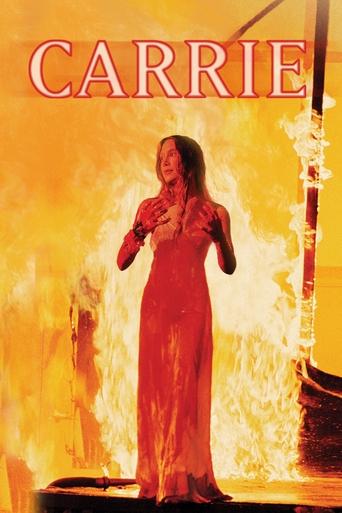
Rather than leaning into familiar imagery from Stephen King‘s novel or Brian De Palma‘s iconic 1976 adaptation, this first teaser feels like a genuine coming-of-age horror story first and foremost. It spends much of its runtime building empathy for Carrie White (Summer H. Howell), letting us sit with her isolation, awkwardness, and desperate desire to belong before hinting at the inevitable nightmare waiting at the end of the road.
What’s immediately apparent is that this version is aimed squarely at a younger audience.
This is Carrie for the Zoomer generation.
The social dynamics, the way the teenagers interact, the visual language, and even the pacing all feel intentionally modern without completely abandoning what made King’s story resonate in the first place. It doesn’t necessarily feel like it’s trying to appeal to those of us who grew up on Sissy Spacek or even the 2013 remake. Instead, it looks designed to introduce an entirely new generation to one of horror’s greatest tragedies.
What also surprised me is how heartfelt the series appears to be. More than anything, the trailer reminded me of why I tend to love coming-of-age horror. There’s a little bit of that emotional DNA that films like Ginger Snaps captured so well, where the horror grows directly out of adolescence, loneliness, and the painful experience of trying to figure out who you are.