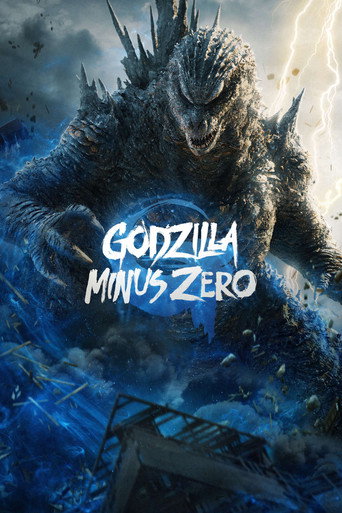
‘Godzilla Minus Zero’ Review: Big, Monstrous, and Confused
‘Godzilla Minus Zero’ dazzles with monster battles but falters with slow pacing and repetitive emotional drama. Read our review.

The first piece of score we hear in Godzilla Minus Zero – stabs of shrill, alarming strings courtesy of the tremendous Naoki Sato – accompanies a sudden dragon attack in the city of Matsumoto. On a purely sonic level, the period kaiju sequel makes it clear that our titular atomic monster is sharing the spotlight. Minus Zero takes place in 1949, two years after post-war Japan’s catastrophic but unifying encounter with Godzilla in Godzilla Minus One. Here, the surviving band of loyal pilots and scientists are thrown in the path of the fearsome Ghidorah. The fact that the scaly, lightning-breathing monster poses a Godzilla-level threat with only one head is an amusing omen that indicates how seriously director Takashi Yamazaki is taking the sequel mantra of escalating both stakes and spectacle.
That Godzilla Minus Zero is more of a King Ghidorah affair than a ‘Zilla one (Godzilla briefly appears three times in the first 90 minutes) is not necessarily a problem – over 30 Godzilla films have experimented with the amount of screentime given to him, his rivals, and the humans left to calculate the collateral damage from letting them duke it out. (No Godzilla dialogue has ever topped the 2014 American film, which succinctly articulated our collective dread and awe with, “Let them fight.”) Minus Zero is about Ghidorah’s beef, while Godzilla is nearly entirely unfazed by the human presence in the film. If only we felt the same.
Human relationships are never the draw of monster brawlers, but they establish the scale and perspective needed to make the gigantic punch-ups feel – well, gigantic. Godzilla Minus One’s decision to center relationships lent it a broad emotional appeal that secured it a global, passionate fanbase (and raised its profile all the way to the Oscars). While the film’s treatment of survivors’ guilt and rebuilding in war’s aftermath sometimes verged on sentimental histrionics (plus some eyebrow-raising nationalism), Minus One wore its heart on its sleeve and found real humanity in its stock characters – former kamikaze pilot Kōichi (), caring survivor Noriko (), and their adopted daughter Akiko (), who was orphaned as in the Tokyo bombings.