Matt Konopka talks with filmmaker Jordan Downey about crafting ‘The Cycle’s’ excellent transformation scene; Plus, an exclusive clip!
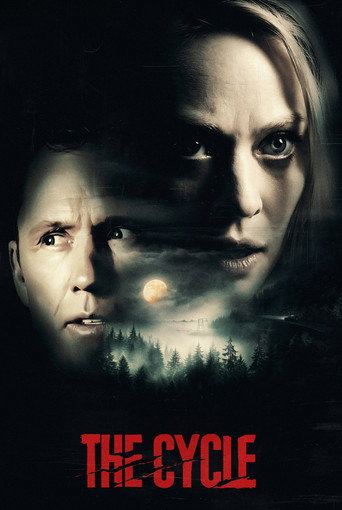
It always excites me when an unexpected gem claws into contention for one of the best horror films of the year. For me, that honor belongs to Jordan Downey‘s The Cycle this time around.
SPOILERS FOR THE CYCLE AHEAD
Of course, one of the many reasons The Cycle has infected me with its bite is that it incorporates my all-time favorite movie monster: the werewolf. And it does so exceptionally well.
Offering notes of The Autopsy of Jane Doe, Downey’s film follows a woman pulled into a murder investigation when the body of her estranged father is found near a crime scene. The police need her help in identifying how and where he died. Though hesitant, she obliges. The big twist comes when we learn that not only was her father a werewolf, but the curse still infects his body, allowing the creature to emerge each full moon despite his death. During the next full moon, the man’s corpse does just that.
While a good werewolf movie doesn’t necessarily depend entirely on a good transformation scene, it’s that moment that can separate the fine films from the great ones. And oh, does Downey unleash a top-tier transformation, accomplished through pure, jaw-dropping practical effects.
Dread can exclusively debut the clip of The Cycle’s transformation scene, which you can find below. Downey also sat down with me to discuss the moment…one that the filmmaker knew he had to nail from the beginning.
Said Downey, “It’s incredibly important to me. [Co-writer] Kevin Stewart and I felt like so much time had gone by since we saw a great one that we really wanted to prioritize that scene in our movie. Especially considering our unique approach and how badly I wanted to see a lifeless corpse become a living, breathing monster. The whole concept of a werewolf movie is one form changing into another, so as a fan of these movies I’ve always preferred seeing that shift happen on screen.“
I’m with Downey here. An American Werewolf in London…The Howling…even the original Wolf Man…all considered triumphs in the sub-genre because of their shocking transformation scenes.
But what makes a great werewolf transformation?
“I actually made a coffee table book for the movie before we shot it as a way to convey the look and feel to the crew, and one of the sections in that book is on this exact topic,” says Downey. “I highlighted four things that I felt make a great transformation:
Human Suffering: We have got to feel the pain of the character and have got to maintain a human element to the process for most of the transformation. We must arrive at the final monster only in the last few moments of the transformation.
Establishing A Witness: It works better if the fear of what’s happening can be shown on the face of someone reacting to the transformation.
Spatial Awareness: The more the location of the transformation can play into the process, the better. You don’t want the backgrounds to distract in a negative way, but if used properly, they can create a sense of chaos and break the monotony of a transformation lingering on any one moment for too long.
Incredible Practical Effects: The first thing anyone is going to notice is how realistic — and cool — the transformation looks. I can speak about pain or character or location all day, but none of it will matter if what’s on screen doesn’t look absolutely fantastic.”
Courtesy of Shudder
For the design of the creature and transformation, Downey reached deep with choices fans may not be expecting.
Explained the filmmaker, “Because we were breaking new ground with the concept of an undead werewolf, it was a combination of random things we could point to for inspiration. We loved the look of the wolf-creature at the end of Fright Night when it transforms under the stairwell. The Howling IV actually has a goopy and somewhat corpsy-looking transformation. I liked the dark, recessed eyes from the monster in The Cellar. There were some incredible Powerwolf album covers that I thought captured a more skeletal-looking wolf. Gamezone miniatures made these cool little die-cast zombie wolves that I bought at one point. So there were a lot of obscure things I tried to acquire and look at while we were working on the script.“
Adds Downey, “Then ultimately that all gets thrown into a blender and filtered back out through the eyes of Patrick Magee, who’s really responsible for cracking the final design. He had spent his entire career thinking through how he would create his own transformation, so we really lucked out when we met him and teamed up on this.”
Of course, there’s a reason we don’t see such well-executed transformation scenes on the regular…they’re hard! You’d better believe the filmmaker and his team faced their own challenges with The Cycle.
Courtesy of Shudder
“The biggest challenge was time and money, which, of course, are always connected,” said Downey. “We protected the effects in the budget as much as possible, so in a way, some of the challenges of the movie were felt in other departments because we steered as many resources as possible toward the effects, especially the transformation.“
Continued Downey, “The biggest, and I think the smartest, thing we did was build the entire schedule around the effects to give Patrick Magee and his team as much time as possible to build all the various elements needed. It’s not just the transformation, but Peter Stump’s (David Myers Gregory) corpse, Lou Bishop’s (Carl W. Crudup) makeup and hand, and, of course, the werewolf suit and heads that Trevor Newlin wore. It took three days to shoot the transformation scene (which resulted in nearly thirteen hours of footage to cut down to the 3 1/2 minute final version).”
To achieve the scene, Downey informs us that Patrick and his team incorporated various old-school techniques, along with some clever creativity.
Said Downey, “One thing he [Patrick] smartly came up with early on was the idea of combining a suit with prosthetics. Most werewolves would be one or the other — you’ve either got someone wearing a full zipped-up furry costume, or you’ve got a more human-looking wolf man with face prosthetics. Patrick said let’s do both. So he put Trevor in a wolf head and wolf torso, while leaving his arms and legs exposed. They then put prosthetics, paint, and fur on his limbs but didn’t bulk them up very much. The final result really showed the scrawny nature of this thing because you got this bigger chest piece and head paired with slender arms and legs.“
Courtesy of Shudder
The thought process and craftsmanship that went into The Cycle‘s werewolf shows up in howling glory on screen. Sadly, some of those behind the magic never saw the finished moment.
“I’d love to point the spotlight onto two actors who were so important to the effects of the movie, both of whom sadly passed away before The Cycle came out,” Downey informs us. “First, Graham Mackie, who provided the nude life cast of Peter Stump’s body. I had this crazy challenge of finding someone who would be willing to go through that who was also a close physical match for David Myers Gregory, and Graham was such a good sport about it. The second is Carl Crudup, who played Lou Bishop. Carl was in my first student film and was always so supportive of me. He immediately said yes when I called him to do The Cycle, and I know he was very proud of his work, as he should be. I just wish both those guys could have seen how it turned out.”
Now that Downey has created a werewolf film that fans will be talking about for years, I have to ask him…what’s his preferred flick in the sub-genre?
Said Downey, “An American Werewolf in London for me — the balance of tone, the sound of the howl, that subway chase, the red puffy jacket, the nazi zombie soldier nightmare — there are just so many visuals from that movie that have been ingrained in me since childhood. When I was in film school, I even did my own novice version of Rick Baker’s ripped-up face and throat makeup that you see in the first vision of Jack. It’s not just a great werewolf movie; it’s a great movie, period, and one that’s inspired me quite a bit.”
The Cycle is now howling on Shudder.
Watch Our Exclusive Clip of the Pivotal Transformation Scene
(This interview has been edited for time and clarity)