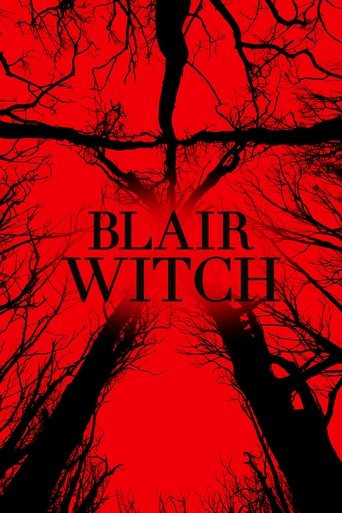
“Blair Witch” debuted on Sept. 16, 2016. The movie was adequately scary, but is still eclipsed by its prequel. Why is that?
Where were you when you first saw The Blair Witch Project? If you’re lucky, you were in a packed theater in 1999, shoulder-to-shoulder with the homies as you witnessed cinematic history. I envy you. I envy your ignorance, which understandably led you to think that Heather, Mike, and Josh were real kids who got yoked up by a real witch.
I came to it late, with the cultural zeitgeist already made naked for me. I missed the raw viewing experience: I couldn’t help but watch The Blair Witch Project with the kind of reverence you reserve for a movie everyone has told you is iconic. Another less-than-ideal circumstance is that I watched it alone, with no one to exchange looks of despair with. And I watched it in my ultra-urban apartment — a bummer because the sound of clubgoers, Afrobeats cranked up to max volume, and public transit roaring by doesn’t exactly create the best environment for folk horror.
Be that as it may, I was still freaked out. I had camped in the Maryland woods as a child and, moreover, the name “Blair” means something to us Marylanders. A local high school and some shopping centers bear the family name of Francis Preston Blair and his son Montgomery Blair, instrumental figures in Maryland’s history. I had even lived in a nearby apartment called The Blairs — about 30 minutes from the Seneca Creek trail where Daniel Myrick and Eduardo Sánchez filmed their freaky found-footage movie in 1999.
That sort of acute terror, which affected even people like myself seeing the movie 20 years later, is hard to replicate. The question then becomes: Can a Blair Witch movie ever top the first one? It’s difficult to say, because the legacy of Adam Wingard and Simon Barrett’s Blair Witch, which celebrates its 10th anniversary this year, remains complicated to this day.
The goal was perhaps similar to Jennifer Kaytin Robinson’s objective on the heels of I’ll Always Know What You Did Last Summeror David Gordon Green taking the Halloween reins from Rob Zombie: Let’s all collectively ignore Book of Shadows: Blair Witch 2 and try again, shall we? Still, horror movie fans expressed a lot of and I think I know why.
The structure of the 2016 movie adheres perfectly to the 1999 one, with little tweaks to keep it from being a frame-for-frame remake. It’s for this reason that some horror fans find the Blair Witch requel uncreative. (When the film first came out, a critic for The Atlantic called Blair Witch “tediously familiar.”) But having rewatched the newer film, I do see the vision. Book of Shadows tried too hard to be different by ditching the found-footage format, and it flopped. Why wouldn’t the new creative team go back to the original formula and jazz it up for modern times, with cellphones, drones, and YouTube as the travel catalyst?
A still from Blair Witch (2016).
James, the younger brother of Heather, glimpses a woman who he thinks to be his missing sister. He teams up with his friend Peter, film student Lisa, Peter’s girlfriend Ashley, and YouTubers Talia and Lane to brave the Black Hills Forest to get answers. If you haven’t seen it, the characters, plot, and dialogue are everything you’d expect. One new element is that the lore behind that image of a camper standing in a bando corner is fleshed out: You can’t make eye contact with the Blair ghoul, because the sheer terror of her face will kill you. But everything is standard horror-movie-in-the-woods fare.
Still, the nighttime rustles of the Blair Witch? The jerking pain of unhealable injuries? The raw frustration of having walked an Ouroboros trail in the haunted woods? These elements of the Blair Witch narrative never get old to me, I’m finding. There’s something perversely seductive about the way Peter unwraps the gauze from Ashley’s oozing, bloody foot, revealing, like a striptease from hell, some strange foreign body in the wound. Likewise, there’s something astonishingly devastating about Lisa flying the drone and being unable, even with this shiny new technology, to chart a path out of this camping excursion from hell.
The main difference is that Blair Witch is presented in a bolder way than its prequel. Myrick and Sánchez preyed on your subconscious, leveraging your curiosity about the Blair Witch’s appearance to pull you through the narrative. Barrett and Wingard give you explicit jump scares and tease out the final, terrifying moments in the house. It feels effective — to me, at least — because my nervous system was dysregulated as hell throughout my rewatch.
In 2016, especially, no one cared. The Guardian said it was too “slick” to be a proper Blair Witch sequel, while also suggesting that found footage as a genre should die. “Ultimately, the only thing mustier than the Blair Witch herself is the found-footage format. Nothing about this film feels found,” their critic wrote at the time. “It’s been carefully and manipulatively packaged, marketed and sold to make a buck with a young, impatient audience.”
Meanwhile, instead of decrying it for being too clean and neat, RogerEbert.com’s Blair Witch review implied the film lacked enough finesse: “Blair Witch has plenty of yelling, but not nearly enough that gets under your skin.” Overall, the critical response is pretty grim, judging by Blair Witch’s Rotten Tomatoes score. Somehow the Tomatometer is higher than the Popcornmeter, but we’re talking about scores of 38% and 30%, respectively. Even as newer audiences interact with the film, Blair Witch’s Letterboxd rating sits at 2.5 stars — below the average 3.5-star rating, which is a sweet spot for beloved-but-okay horror movies.
A still from Blair Witch (2016).
I think that Barrett and Wingard’s challenge was largely no different than anyone tasked with reviving a franchise. Still, the order was taller because they weren’t just continuing a cult classic, but an instant classic. For the oldheads who have deep emotional attachments to The Blair Witch Project and the gore whores who were looking for something freakier, I can understand how the 2016 installment doesn’t reach all the way up to the top.
Still, I don’t think this movie should just be thrown away because it didn’t live up to horror fans’ nostalgia and tough expectations. Again, I lean into the Maryland of it all — not just because I love seeing state flag crab bumper stickers zoom by, but because the found footage and hyperlocal setting make the horrifying myth feel more real. In its 2016 review, TIME Magazine called Blair Witch “barely scary,” but I beg to differ.
Now that I live in the sticks, nothing was sweet when I watched Blair Witch this time around. I had no urban distractions to take the edge off. As I sat down to prep for this essay, I realized I was procrastinating, dillydallying and pursuing sidequests so I wouldn’t have to hit play. This time, I was fully aware of the pitch-black woods at my back — which I romanticize to fall asleep each night. For me, the proximity of this 21st-century myth and its faux-realism usurp any kind of argument about whether Blair Witch was an elevated horror movie. I peer out into my backyard or hear the leaves scraping across the concrete under my window, and Blair Witch feels real to me.
We can’t all be so lucky to live in Maryland, but if you saw Blair Witch and hated it, I invite you to give it a chance. Watch it with fresh eyes. See it for what it is: Another found-footage flick, not something that was supposed to overshadow a formative horror movie experience you had as a young cinephile. Blair Witch was never supposed to be that.
Remember this when the new Blair Witch movie comes out in 2027. Remind me to take my own advice when the Margaret Qualley-Callum Turner Possession remake comes out, too.