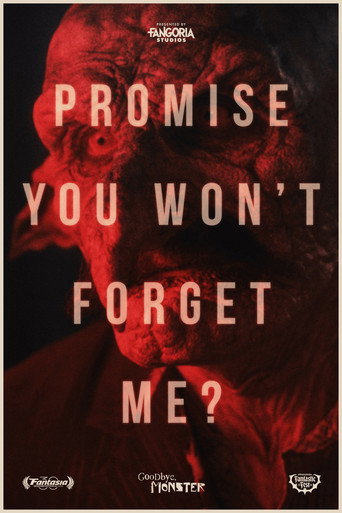
Luke Barnett’s ‘Goodbye, Monster’ is a sincere horror short, proving again how Barnett is one of this generation’s most passionate creators.
When I screened Spider One’s Big Baby earlier this year (great flick, by the way), the biggest smile flashed across my face when writer/director/actor Luke Barnett appeared on-screen. While it was a brief role, I was thrilled to see him. I’ve been professionally involved in the horror space since 2020, and while I’m not certain Luke even remembers, he was one of the first people to celebrate my work and welcome me into the genre community I remain a part of today.
It helps that he’s remarkably talented, too. Beyond appearing in roles over the years, Barnett is also an accomplished filmmaker, and his big break was 2024’s The Crossing Over Express, which I caught at that year’s Panic Fest. I loved it. It brought me to tears. I knew it was going to be big. Over 500,000 views within the first 72 hours of posting proved me right.
Imagine my excitement, then, when I was connected with Goodbye, Monster, Barnett’s latest triple-duty endeavor (he writes, directs, and acts). It’s also FANGORIA Studio’s first “short to feature” project, and, yeah, it’s as tender and deeply felt as The Crossing Over Express.
The short, clocking in at just over seven minutes, packs in two major ideas: the pain of growing up and the sheer delight of hearing Patton Oswalt crash out. Barnett stars as the titular monster (featuring stunning SFX from Dan Crawley), a kind of Monsters, Inc.-adjacent baddie who is assigned a child, Wilson (Kue Lawrence), to scare. Some kids get Santa Claus (though not really), and others get monsters under the bed courtesy of swelling adolescent anxiety.
But Wilson’s getting older, and that means he no longer needs a monster. It’s a bite-sized coming of age, and yeah, Barnett’s script– augmented by Bear McCreary’s score – made me tear up a time or two. Growing up is never easy, especially when we need to say goodbye to the things, however monstrous, that defined those early years. It’s far from maudlin, however, and Barnett’s off-camera finale yields the requisite short-form, gut-busting climax.
![‘Goodbye Monster’ Review: Seven Minutes of Monsters, Growing Up, and Patton Oswalt Losing It [Fantastic Fest]](https://www.dreadcentral.com/wp-content/uploads/2026/09/GBM-Stills_7-1600x900.jpg)