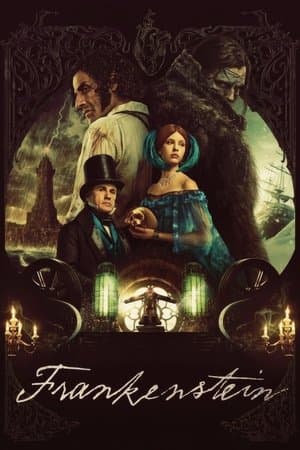
Review: Guillermo del Toro’s FRANKENSTEIN Is Alive With Passion And Craft
The director's long-gestating adaptation was well worth the wait.
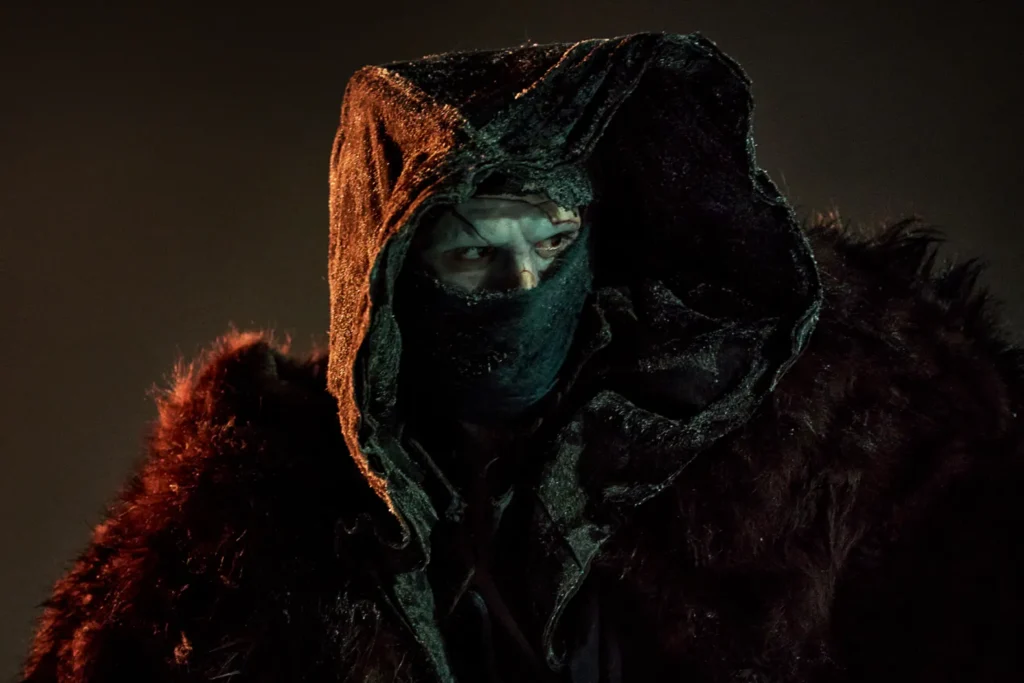
Anyone familiar with Guillermo del Toro’s filmography will find it no surprise that in his new screen version of Frankenstein, his sympathies lie squarely with the Creature. Of course, thus it has often been in the cinematic history of Mary Shelley’s creation, most significantly Boris Karloff’s indelible turn as the misunderstood Monster. The original text has been adapted, reimagined, expanded upon, and in some cases perverted 100 different ways on film over the past century, and del Toro now contributes one of the best by going back to the source and translating Shelley’s words to images through his own personal lens.
Frankenstein, which plays select theatrical venues beginning October 17 and premieres on Netflix November 7, begins in “The Farthermost North” in 1857, as the crew of an expedition to the North Pole attempt to free their ship, the Horisont, from the ice. Into this already fraught situation come two figures, one pursuing the other. These are, of course, Victor Frankenstein (Oscar Isaac), who’s bloodied and near death, and his creation (Jacob Elordi), shrouded, animalistic and impossibly strong. After a battle with this Creature that results in serious casualties, Victor begins relating his story to the Horisont’s captain Anderson (Lars Mikkelsen). Del Toro introduces this portion as “Part I: Victor’s Tale,” signaling his ambition to honor his literary source.
At the same time, he makes Frankenstein grandly cinematic from its opening frames, as Tamara Deverell’s sumptuous production design and Kate Hawley’s swoon-worthy costumes immerse us in a 19th-century milieu merging heightened reality with streaks of the fantastical. We’re first taken back to Victor’s childhood (in which he’s played by the gifted young Christian Convery from Sweet Tooth and The Monkey), in which the man he will become is defined by his love for his mother Claire (Mia Goth) and his attempts to please his domineering surgeon father Leopold (Charles Dance). Leopold’s approach to his practice is cold and clinical—“There is no spiritual content in tissue, no emotion in muscle,” he instructs Victor—and even he cannot save Claire from dying while giving birth to Victor’s brother William.