Following Amy Madigan’s Oscar win, we reflect on the unmissable impact of Aunt Gladys in ‘Weapons’ and on the future of horror movies.
Editor’s Note: This editorial was originally published when Amy Madigan received her Academy Award nomination for Weapons. It has been updated to reflect her win.
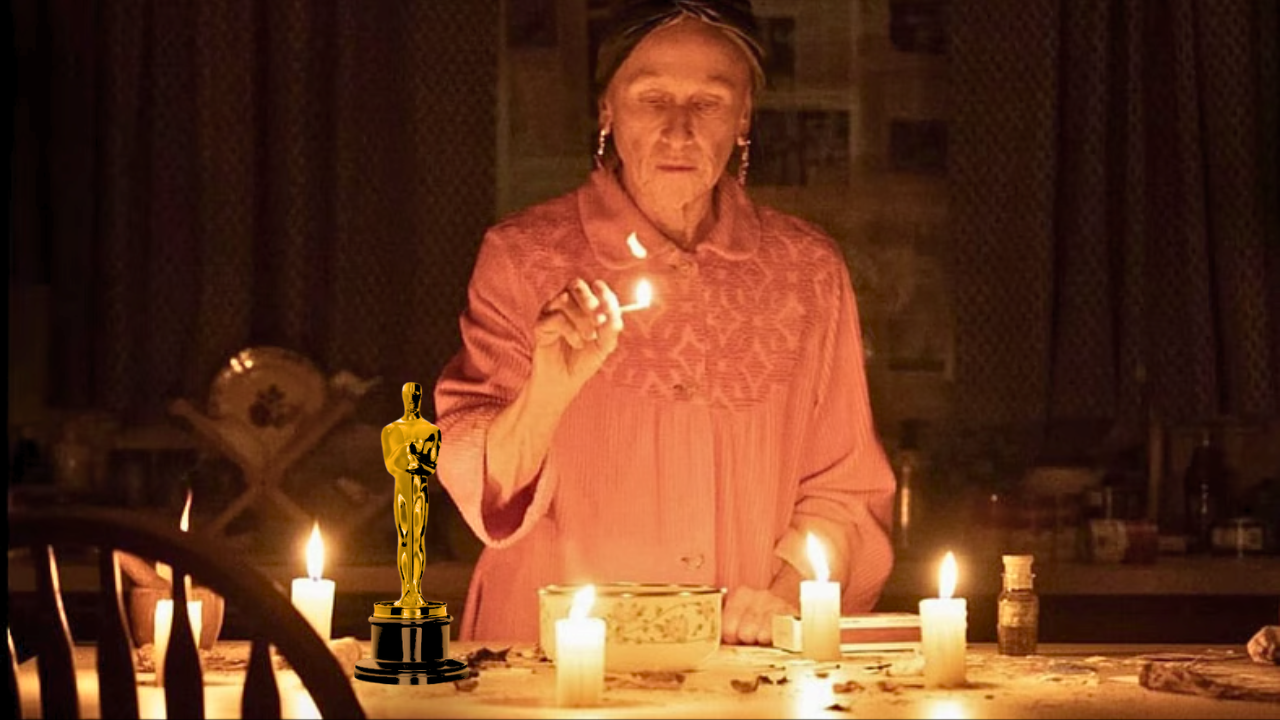
If Zach Cregger’s Weapons is a knife, then Amy Madigan’s Aunt Gladys is its blade. Last, she earned an Academy Award for Best Supporting Actress for the role. It’s an achievement that could have felt unthinkable not so long ago. An unapologetically horror film, rewarded not for dressing up in the cosplay of prestige, but for its tension, audacity, and a standout performance that’s both grotesque and downright scary.
Madigan’s Oscar win signals that great genre performances are becoming harder for the awards circuit to ignore. Her Academy Award for Best Supporting Actress for Weapons marks a historic moment for a performance that is unembarrassed to be rooted in genre.
The horror community watched in awe last year as The Substance picked up a handful of Oscar nominations, including one for Demi Moore in the Best Actress category. While Moore’s eventual loss stung, Madigan’s victory now feels like the continuation of that momentum. This year’s ceremony made that shift impossible to ignore. Horror cinema had a massive night across the board, with Sinners taking home four Oscars and Frankenstein winning three.
Perhaps The Substance helped finally begin the shift in how Academy voters view genre filmmaking and the daring performances it often produces, a near full decade after Jordan Peele took home a statue for Get Out? Either way, Aunt Gladys demanded to be taken seriously. And the Academy knew to listen.
The impact of Weapons has already extended beyond the film itself. Director Zach Cregger has confirmed that a prequel centered on Aunt Gladys is officially in development, signaling just how deeply the character resonated with audiences. While Weapons expanding into a franchise isn’t surprising given the film’s critical and commercial success, it’s encouraging to see filmmakers and studios recognize exactly what made the movie connect in the first place.
When I reviewed Weaponsthis past summer, I made sure to note that the film skyrockets when it showcases its dynamic between young Alex (Cary Christopher) and his aunt (Madigan). Today, these still feel like the moments where the film truly began to make history. Their scenes are unnerving and sadistically playful. There’s this uneasy, queasy intimacy to them, the kind that makes you feel complicit just for watching, and Weapons takes great glee in its refusal to look away. It’s like watching a rattlesnake raise a baby mouse: morbidly fascinating, sure, but the tension is nearly unbearable to witness.
In all fairness, much of that tension and weight falls on Christopher, who delivered one of the most emotionally fine-tuned performances by a young actor the genre has ever seen. His scenes with Gladys aren’t just frightening, but shocking. There are quiet moments of domesticity between them that hit me hard, as they recognize something cinema rarely gets right: childhood abuse isn’t just about fear and control, but the confusion that happens when an authority figure misuses their power. It’s worldview-distrubting stuff that Cregger nails with confidence.
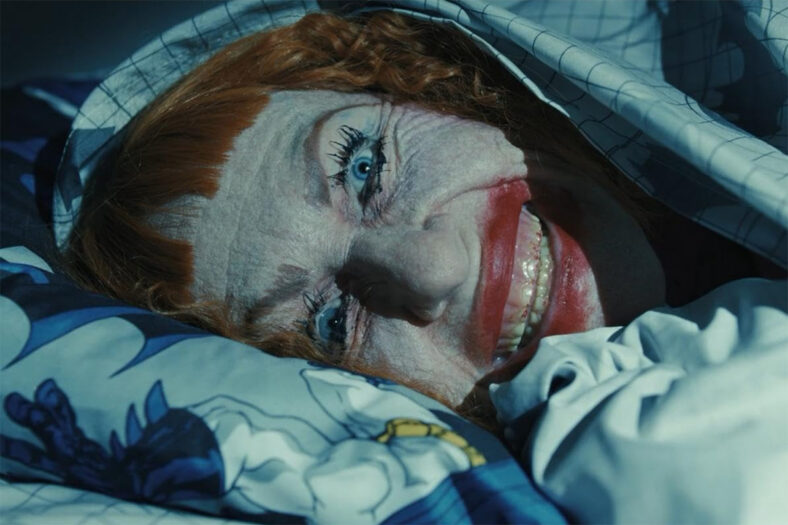
Madigan’s performance is terrifying not because it’s simply shocking or grotesque, but because it feels ancient, knowing, and deliberate. She plays Gladys like a figure who’s wandered out of the gruesome pages of a Grimm fairy tale and right onto the Warner Bros. lot. There’s something classical about her approach, almost operatic, but it never tips into camp territory. She doesn’t chew the scenery; she eats it up as you can hear it screaming, still alive, and in complete agony.
Courtesy of Warner Bros.
Later in the year, when I spoke with horror icon and Freddy Krueger actor Robert Englund, he brought Madigan up with excitement. Englund, who knows better than anyone what it means to build an iconic horror villain, couldn’t resist praising her work in Weapons.
“I loved Weapons — I’ve been telling people to go see it,” he told me, adding: “But what’s really great about that film is Amy Madigan. That’s Ed Harris’s wife, and I’ve known of her and Ed forever. Friends of mine went to school with Ed … and my friend David Irving’s sister, Amy Irving, from Carrie and The Fury, used to tell me stories about Amy Madigan back in the day.”
“People remember her from Field of Dreams,” he continues to tell me about the actress and her lengthy, impressive career, adding,“but she’s such a rock-and-roll performer — fierce, unpredictable, and just terrific in Weapons … she’s genuinely terrifying in it.”
Englund is right on the nail. She is genuinely terrifying in it. He would know, having crafted, arguably, the most iconic yet frightening figure in modern pop culture history. Game recognizes game, I suppose.
Madigan herself has been refreshingly open about her horror influences for Gladys. In an interview with Entertainment Weekly, she cites What Ever Happened to Baby Jane?, Nosferatu, and the unsettling photography of Diane Arbus as direct influences:
“How you make somebody just drained of everything,” Madigan told them, alluding to the stark, uncanny design, look, and feel of the character. “Those kind of iconic things really stuck in my mind.”
This statement left me feeling like Gladys isn’t just cruel, but that she’s completely spent and used up. Whatever humanity she once had has been leeched away, leaving something dark and obscene in its place. It even inches things towards the realms of cosmic horror or peak Stephen King-levels of hard-hitting terror.
The Academy didn’t just honor a beloved industry veteran. They awarded a character in a film who exists in the great legacy of horror monsters, and not just one reacting to them. Aunt Gladys belongs in the same conversation as the genre’s greatest creatures, not unlike Englund’s own Krueger. She’s not redeemable. She is not symbolic. She is horror, tried-and-true.
So let’s raise a bell for Aunt Gladys and Amy Madigan. These women have changed how genre is perceived, and they’ll go down in history as horror heroes for it.