‘The Devils’ NC-17 Director’s Cut Review – The Definitive Version of Ken Russell’s Stunning and Highly Controversial Masterpiece [Beyond Fest]
Matt Konopka reviews the NC-17 director’s cut of Ken Russell’s ‘The Devils’, the definitive version of the filmmaker’s shocking masterpiece.
![‘The Devils’ NC-17 Director’s Cut Review – The Definitive Version of Ken Russell’s Stunning and Highly Controversial Masterpiece [Beyond Fest]](https://www.dreadcentral.com/wp-content/uploads/2026/08/devils-1200x675.jpg)
Once you see Ken Russell’s The Devils, you never forget it. One of the most controversial films of all time, thanks to an abundance of graphic sex and violence wrapped around the tale of a repressed nun, it was outright banned in many countries upon its release in 1971. Where it could be seen, it was heavily censored. Now, over fifty years later, the director’s cut has been restored in glorious 4K. I’m here to ring the church bells, stand atop the Sistine Chapel, and scream that this is the definitive version of Russell’s stunning masterpiece.
For those who haven’t had the pleasure of this cinematic experience, The Devils takes place in plague-ridden France around 1634. Cardinal Richelieu (Christopher Logue) convinces King Louis XIII (Graham Armitage) to merge church and state into a holy (more like unholy) matrimony. Meanwhile, the city of Loudon has been left to Father Grandier (Oliver Reed) following the death of the governor. When Grandier gets in the way of Baron De Laubardemont’s (Dudley Sutton) orders to demolish Loudon, Sister Jeanne (Vanessa Redgrave), jealous over Grandier’s marriage to another woman, accuses the priest of witchcraft. With the lie comes violence, terror, and pandemonium.
Russell frequently trafficked in horror, from Altered States to Gothic and The Lair of the White Worm. While not a genre film in the traditional sense, I’d call The Devils the scariest thing the legendary filmmaker ever made. That opening moment when Richelieu grins with Louis over the merging of church and state and the title bleeds onto the screen accompanied by Peter Maxwell Davies‘ cacophonous score…it sends chills down my spine every time. When someone asks why it’s so important to keep church and state separate, you can point them to The Devils. It perfectly captures the terror wrought on the public when governed by belief over fact, hearsay over reason. Only in this case, Russell flips the usual witch hunt narrative on its head, centered around a powerful man rather than a woman.
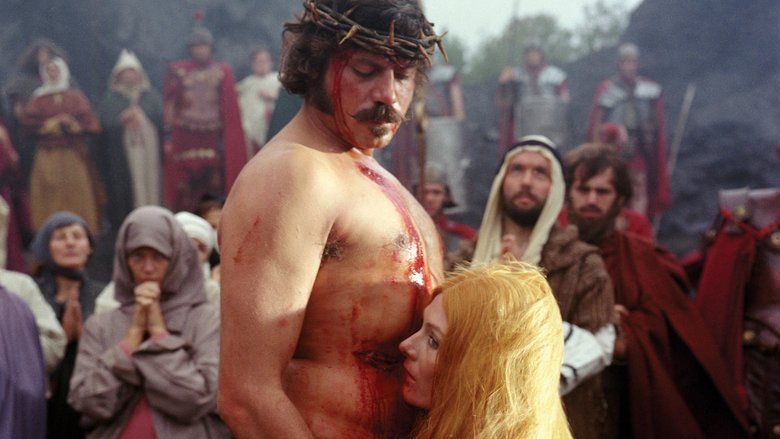
That man is Reed’s openly misogynistic and blasphemous priest, Grandier. Everybody loves a hot priest, as we see in the countless women who either throw themselves at his feet or daydream about him (as Jeanne does). Although I bet she’s the only one who fantasizes about him staked to the cross as she licks his gaping wounds, but hey, to each their own. He’s a man who knows he’s a bit of a piece of shit. He enjoys the power, the women, the wealth, and he doesn’t care who knows it. That makes him a rarity among the other “holy men”, namely witch-hunter Father Barre (), because he admits to the hypocrisy.